
Toddler Refuses New Baby Sibling: How to Respond

 Discover a Free Education Video App for Kids
Pastory uses AI to personalize educational video content based on your child’s interests and personality. Safe, engaging, and built for curious young minds. Sign up now to stay updated and enjoy early access with a free trial
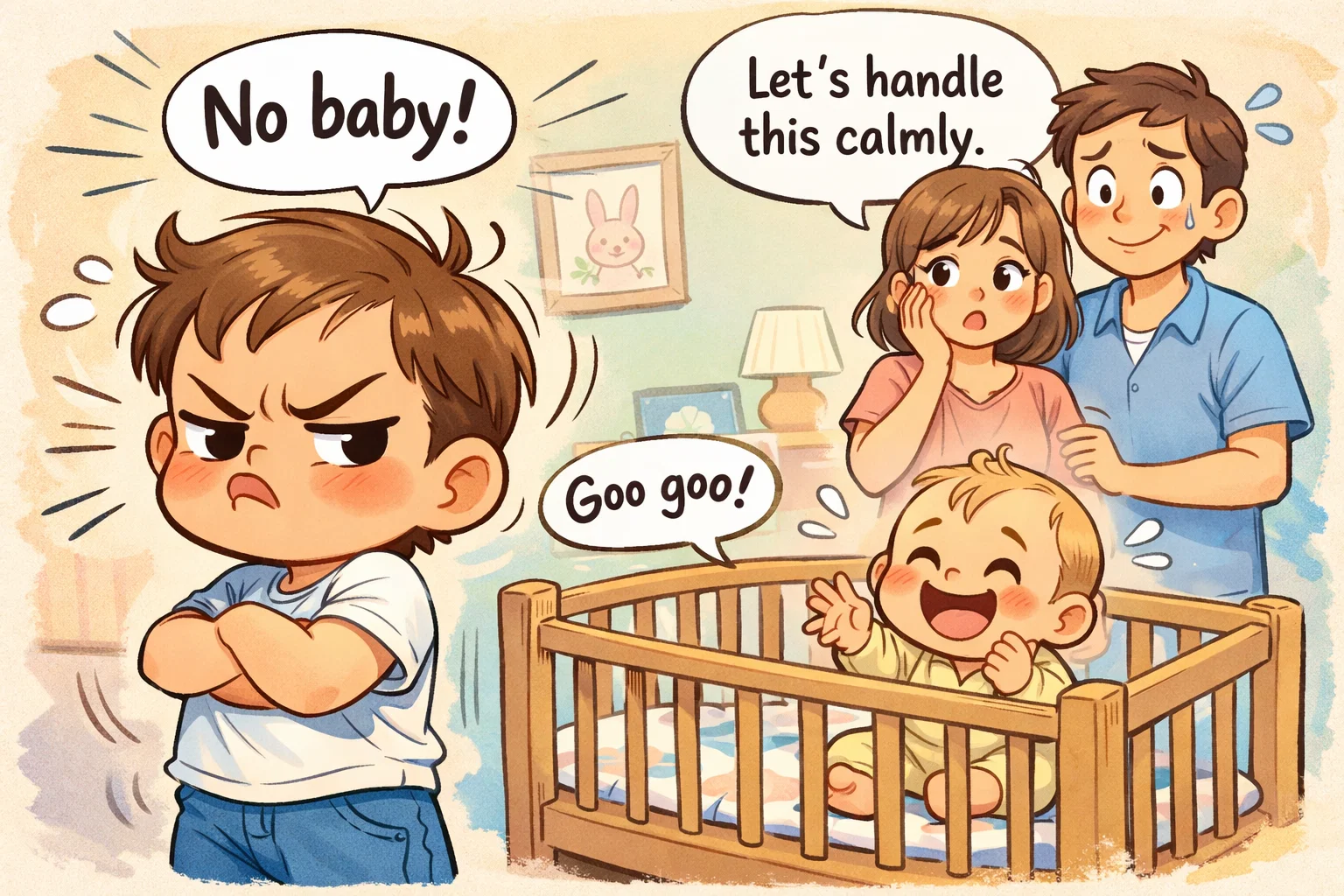
The arrival of a new baby is often painted as a season of pure joy, but for a toddler or preschooler, it can feel like a major shift in their world. If your older child is suddenly throwing a tantrum, refusing to see the baby, or acting out in ways you’ve never seen before, you aren’t alone. This response is a deeply human reaction to a major life transition, often rooted in a deep, instinctive fear of losing their most precious resource: you.
Welcoming a new baby into the family requires a complete recalibration of your household’s emotional architecture. This guide will explore why your young toddler might be struggling, how to decode their behavior, and practical, evidence-based strategies to help your toddler navigate these big feelings while building a healthy, lifelong sibling relationship.
Attention Connection After New Baby Arrival
Changes in parental availability
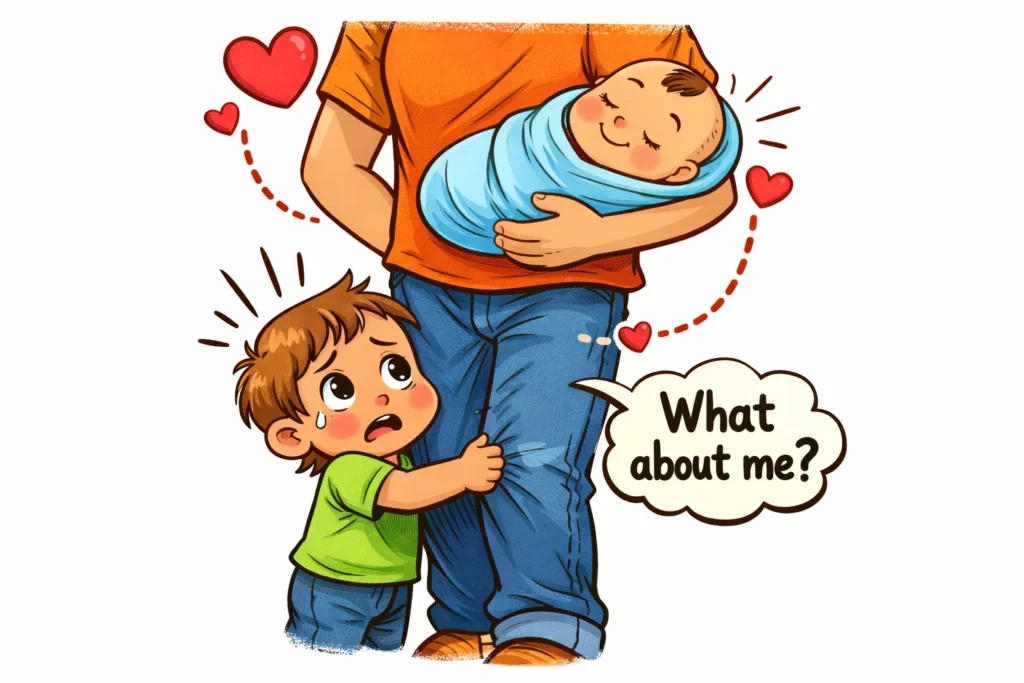
When a new sibling enters the home, the older sibling immediately notices a drop in parental “emotional bandwidth”. Routine moments that were once exclusive – like bath time or bedtime stories – are suddenly interrupted because the baby cries or the baby needs a diaper change. To a three-year-old, this isn’t just a minor inconvenience; it is a perceived threat to their safety and security. Family systems theory suggests that the introduction of an infant disrupts established dyads, forcing a redistribution of emotional energy that the older child may perceive as being “dethroned.”
Toddler response to divided focus
Common reactions to this reduced exclusivity include avoidance, refusal to hold the baby, or even throwing toys. You might notice your toddler is still struggling to find their place in the new family. These behaviors are often protests against the shift in focus. A younger sibling requires constant physical proximity, which can lead the older child to feel physically and emotionally distant from their primary caregivers.
Ways to rebuild connection intentionally
Rebuilding connection doesn’t require hours of time; it requires predictable moments of attention.
- Special time: Dedicate just 10–15 minutes a day of one-on-one time while the baby is with another caregiver.
- Micro-connections: Use “filling the cup” moments – eye contact, a quick squeeze, or a whisper of “I love you” – while you are busy with the baby.
- Rituals: Maintain at least one pre-baby ritual, such as a specific morning song, to signal that their world hasn’t completely changed.
Jealousy and Rivalry Triggers in Toddlers
Why jealousy appears suddenly
Sibling jealousy often follows a “honeymoon phase.” Initially, the new baby arrives and the toddler is curious. However, once the novelty fades and the toddler realizes the baby sibling is staying permanently, the competition becomes real. This delayed reaction often appears a few weeks after the birth of a sibling as the initial postpartum period ends and the reality of shared resources sets in.
Difference between jealousy and rejection
It is vital to distinguish between a toddler “hating” their baby brother and a toddler feeling insecure. When a toddler refuses to interact, it often signals a fear of abandonment rather than a true dislike of the infant. From a developmental perspective, toddlers evaluate their status by comparing how much positive attention they receive versus the new brother or sister.
Normalizing rivalry without reinforcing it
Avoid labeling your child as “the jealous one.” Instead, use language that validates the difficulty of the transition.
“It’s hard to wait for me to finish caring for the baby. You wish I could play right now, don’t you?”
| Theoretical Construct | Primary Mechanism | Impact on Sibling Dynamics |
| Social Comparison | Upward comparisons between siblings | Shapes self-esteem based on perceived status |
| Attachment Theory | Internal working models of self | Determines security and fear of abandonment |
| Evolutionary Biology | Competition for survival resources | Instinctive fear of resource depletion (milk, care) |
Emotional Cup First Approach
Meaning of emotional cup for toddlers
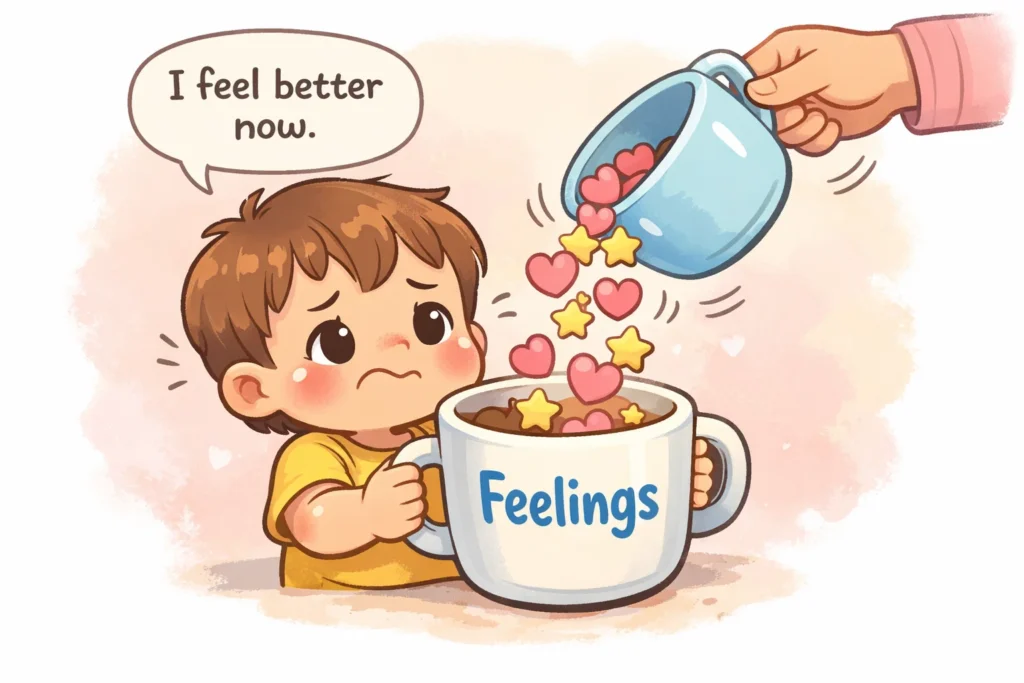
In parenting psychology, the concept of an “emotional cup” is often used. A toddler’s cup is filled by time and attention, physical affection, and feeling seen. When a new baby in the family arrives, the toddler’s cup often drains faster than it can be refilled.
Signs emotional cup is empty
An empty cup often manifests as negative attention-seeking. If a child can’t get positive attention, they will settle for any attention – even a scolding.
- Aggression: Like hitting or trying to hurt the baby.
- Regression: Wanting to act like a baby or use a bottle.
- Clinginess: Refusing to let go of a parent.
Practical ways to refill emotional reserves
To help your toddler feel safe and secure, you must proactively refill their cup. Let your toddler know they are still your “big kid” while acknowledging they are still small. Ensure they have time for your toddler specifically, focusing on activities they enjoy without the baby present.
Planning for Success Around Baby Interactions
Setting toddler up before interactions
Before asking a toddler to see the baby or be gentle with the baby, check their physical state. A hungry or tired toddler has very limited emotional regulation. Ensure their basic needs are met before expecting them to engage in their new role.
Environmental adjustments at home
Create “toddler-only” zones where the baby isn’t allowed. This might be a specific play mat or their bedroom. Having a space where their child plays undisturbed supports their sense of autonomy.
Reducing conflict through timing
The most difficult times are often when the baby cries or during feedings. Plan “busy bags” or special toys that only come out when you are busy with the baby. This associates the baby’s needs with a positive activity for the toddler.
Modeling Empathy Without Pressure
Showing empathy through behavior
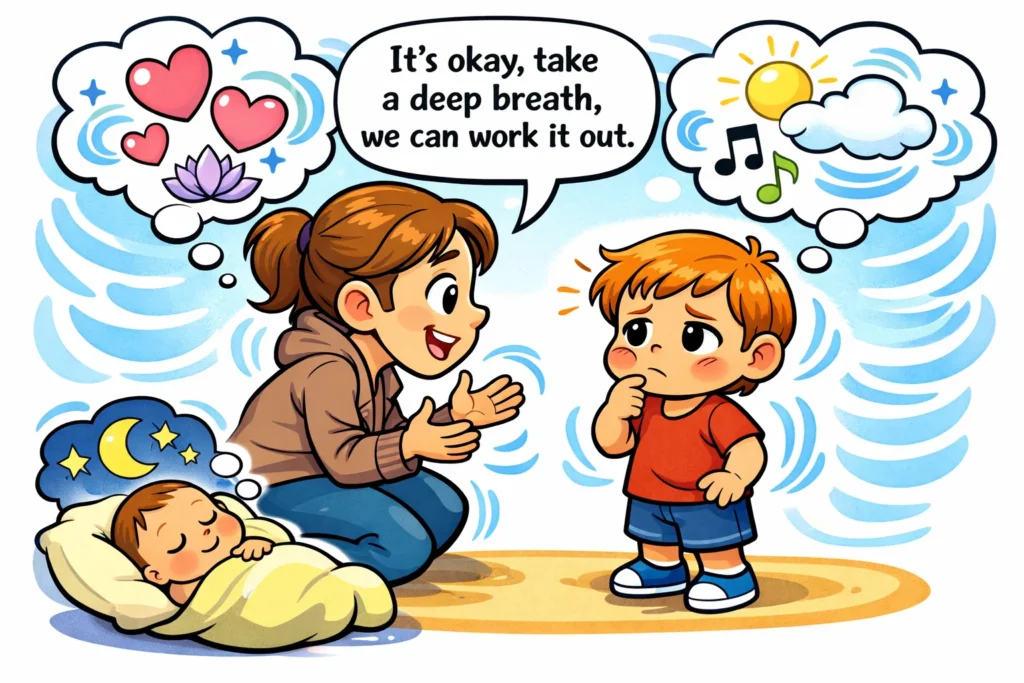
Toddlers are “little scientists” who mirror your reactions. If you remain calm when the baby arrives and the house feels chaotic, they learn that the situation is manageable. If you react with high stress, they will mirror that anxiety.
Language that validates feelings
Instead of saying “Don’t be sad, you love your baby sister,” try:
- “It’s okay to feel mad that the baby needs so much help.”
- “I hear you. It’s hard to share my lap right now.”
Avoiding forced affection
Never force a toddler to hold the baby or give kisses. Forced bonding often backfires, creating resentment. Let your toddler decide when they are ready to move closer.
Positive Teaching During Difficult Moments
Teaching gentle behavior calmly
When you notice your toddler being gentle with the baby, name it immediately. “You were so soft when you touched your baby brother’s hand. That felt nice to him.”
Responding when toddler hurts baby
If your toddler is hitting or trying to hurt the infant, prioritize safety first. Use the C.A.L.M. Method:
- Connect: Get on their level.
- Acknowledge: “You’re feeling really big feelings.”
- Limit: “I can’t let you hurt the baby. This is a safe house.”
- Mentor: “You can hit this pillow if you are mad.”
Using repetition instead of punishment
Raising children is a marathon of repetition. A toddler’s brain is still developing impulse control. They may need to hear the boundary 100 times before it sticks. Punishment often increases sibling jealousy by making the toddler feel further “rejected” in favor of the baby.
Toddler Regression After New Sibling Arrival
Common regression signs
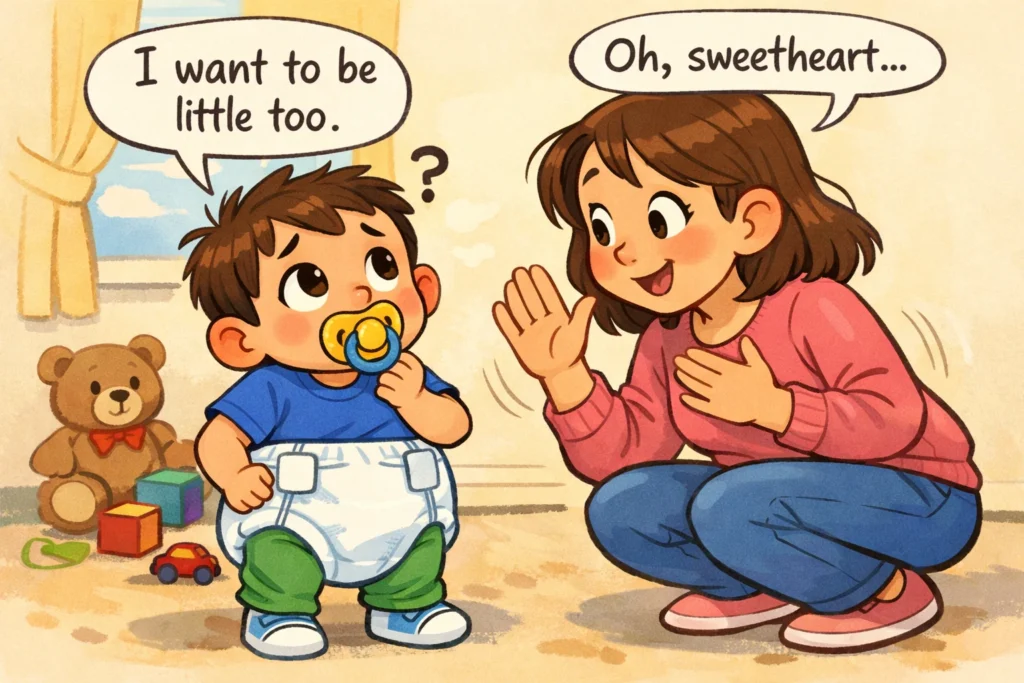
It is completely normal for your toddler to regress. You might see:
- Toileting setbacks (accidents).
- Demanding a pacifier or bottle.
- Difficulty sleeping through the night.
- Using “baby talk.”
Why regression happens
Regression is a communication tool. The toddler sees the new baby brother or sister getting immense care and thinks, “If I act like that, maybe I’ll get that much attention too.” It is a stress response, not a manipulation.
How to respond without reinforcing regression
“Lean in” to the request. If they want to be rocked like a baby, do it for five minutes. Often, once the emotional need is met, the toddler will happily jump down and return to being a “big kid.”
Preparing Toddler Before Baby Arrival
Timing conversation about new baby
For a young toddler, wait until the physical changes are obvious. For an older toddler or preschooler, you can start talking about the arrival of a new sibling a few months in advance.
Setting realistic expectations
Don’t just talk about the “new playmate.” Be honest: “The baby will cry, sleep a lot, and won’t be able to play with your trucks for a long time.”
Involving toddler in preparation
Let them help choose a new baby brother or sister’s blanket or “help” assemble the crib. This fosters a sense of agency.
Introducing Toddler to Baby Sibling
First meeting guidance
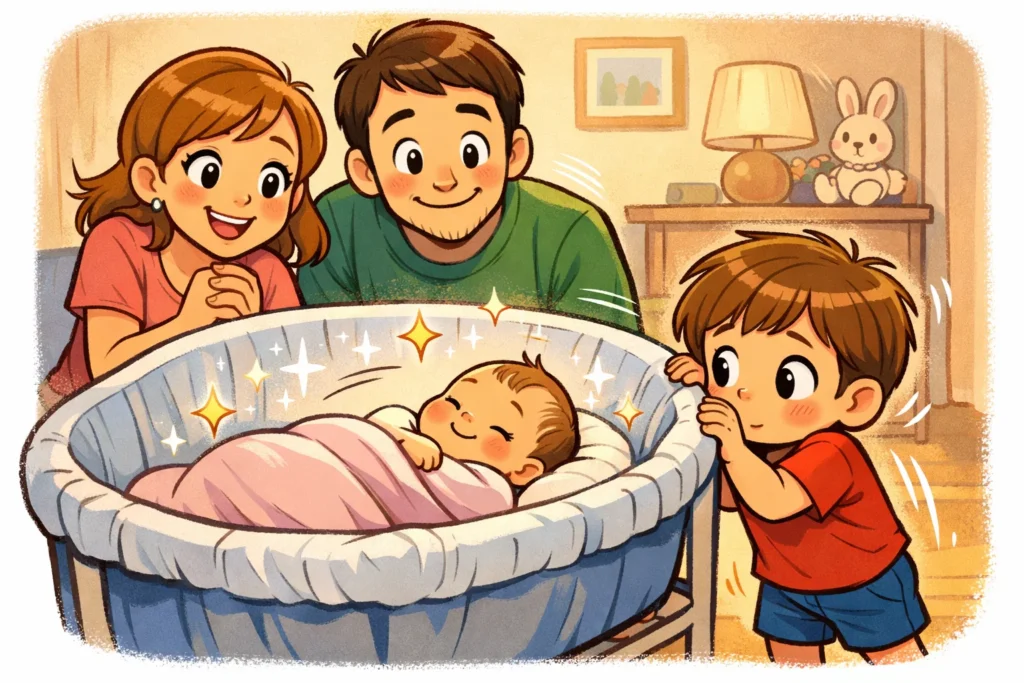
A common tip from experts is for the mother to have “empty arms” when the toddler first enters the room. This allows for a reassurance hug before the new baby is introduced.
Language used during introduction
Instead of “Look at your new brother,” try “Look what we have for you! This is your baby.” Framing the infant as “theirs” can build a sense of pride.
Managing early reactions safely
If the toddler is indifferent or even hostile, don’t panic. Your relationship with your toddler is the priority in those first moments.
Helping Toddler Adjust After Baby Comes Home
Maintaining predictable routines
Routine is an anchor. Try to keep the toddler’s meal and nap times exactly the same as they were before the baby is born.
One-on-one time strategies
| Strategy | Implementation | Benefit |
| The “Hand-Off” | Partner takes baby while you bathe toddler | Maintains primary attachment |
| Voice-Over | Talk to the baby about the toddler: “Baby, wait a second, I’m helping your big brother right now.” | Shows toddler they come first sometimes |
| Special Time | 10 minutes of child-led play | Refills the emotional cup |
Supporting autonomy and independence
Give your toddler choices to help them feel in control. “Do you want to give the baby the blue pacifier or the green one?”
Benefits of Sibling Relationship Long Term
Emotional development benefits
While the early days are hard, having a brother or sister eventually teaches empathy, negotiation, and cooperation. These social skills are invaluable.
Why bonding cannot be rushed
Sibling relationship development is a marathon. It takes months, sometimes years, for the bond to solidify.
Common Mistakes When Toddler Refuses Baby
- Forcing interaction: This builds resentment.
- Comparing siblings: “Why can’t you be quiet like the baby?” (This triggers sibling jealousy).
- Dismissing feelings: Saying “You’re fine” when they are clearly upset.
When to Seek Extra Support
Signs additional help may be needed
If you see persistent aggression, total withdrawal, or if the toddler’s behavior doesn’t improve after several months, it may be time to consult a professional.
Professional support options
Pediatricians and family counselors can help determine if the behavior fits the criteria for Sibling Rivalry Disorder (ICD-10 F93.3).
Bottom Line for Parents
The arrival of a new sibling is a major transition. Progress isn’t linear; you will have good days and “tantrum days.” Focus on reassurance, one-on-one time, and staying gentle with the baby and yourself. You are building a new family dynamic, and with patience, your toddler will eventually find their footing in their new role.

Take a short quiz to find out what your everyday choices say about your parenting style
When your child is curious about something new, what’s your instinct?
Take a short quiz to find out what your everyday choices say about your parenting style
“Can I download this app?” What happens next?
Take a short quiz to find out what your everyday choices say about your parenting style
When it comes to rules at home, which sounds most like you?
Take a short quiz to find out what your everyday choices say about your parenting style
If you could give your child one life skill today, what would you pick?
Take a short quiz to find out what your everyday choices say about your parenting style
Your child gets to choose what to watch. What would your ideal setup look like?
Take a short quiz to find out what your everyday choices say about your parenting style
Pick your parenting superpower ✨



