56 Educational Activities for Preschoolers: Learning, Play, and Development

 Discover a Free Education Video App for Kids
Pastory uses AI to personalize educational video content based on your child’s interests and personality. Safe, engaging, and built for curious young minds. Sign up now to stay updated and enjoy early access with a free trial
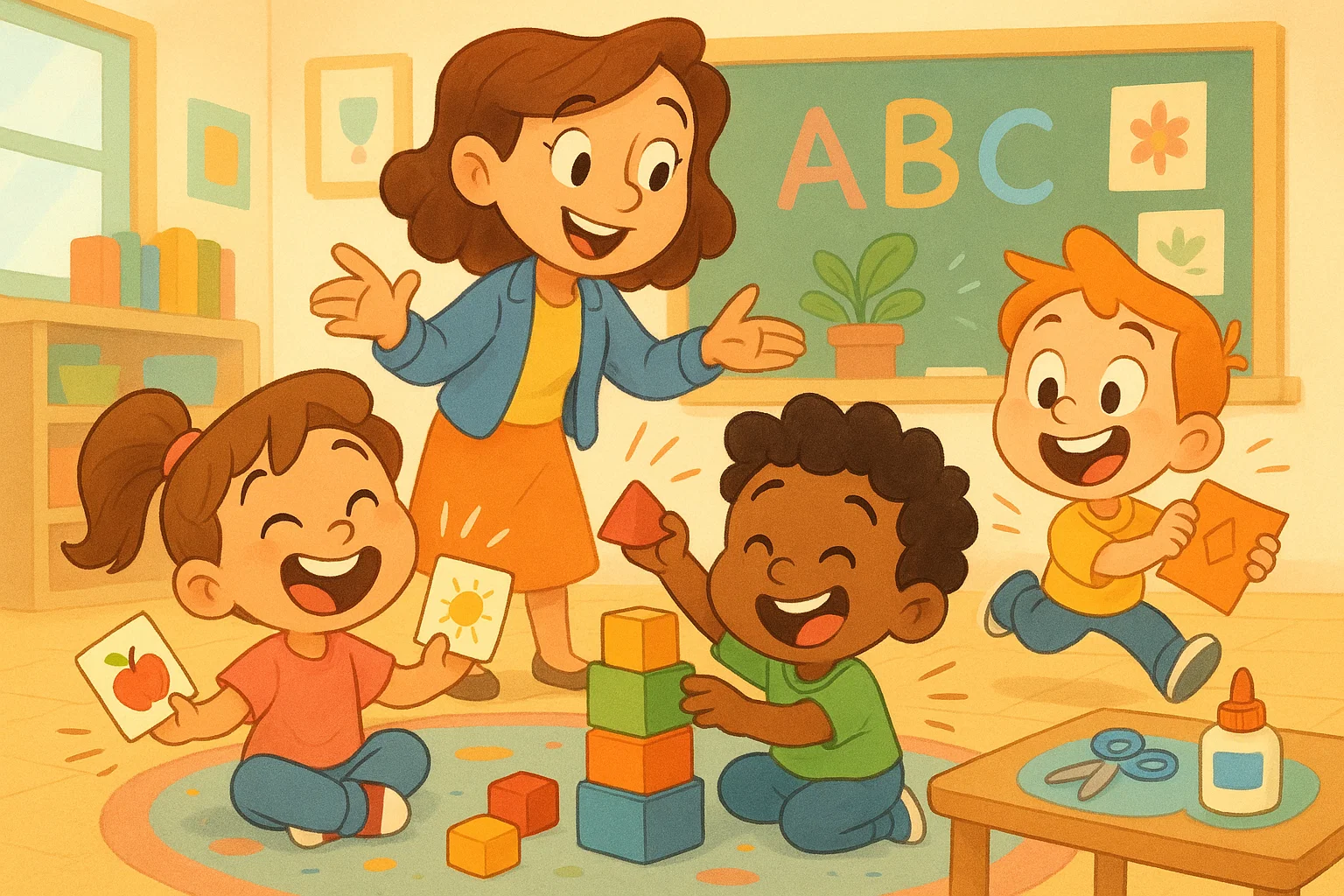
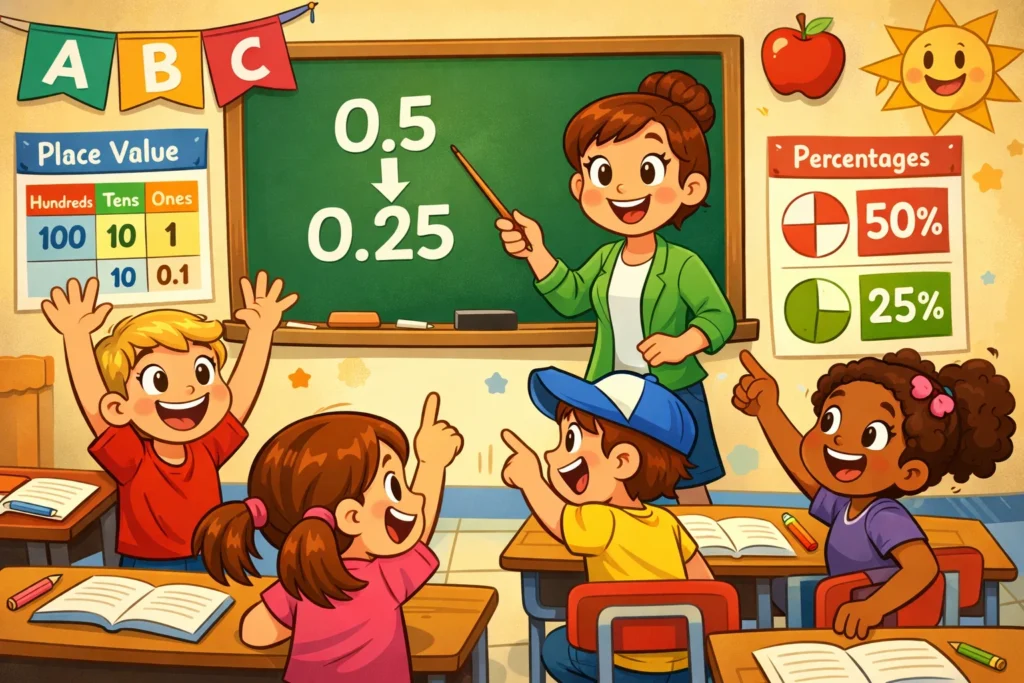
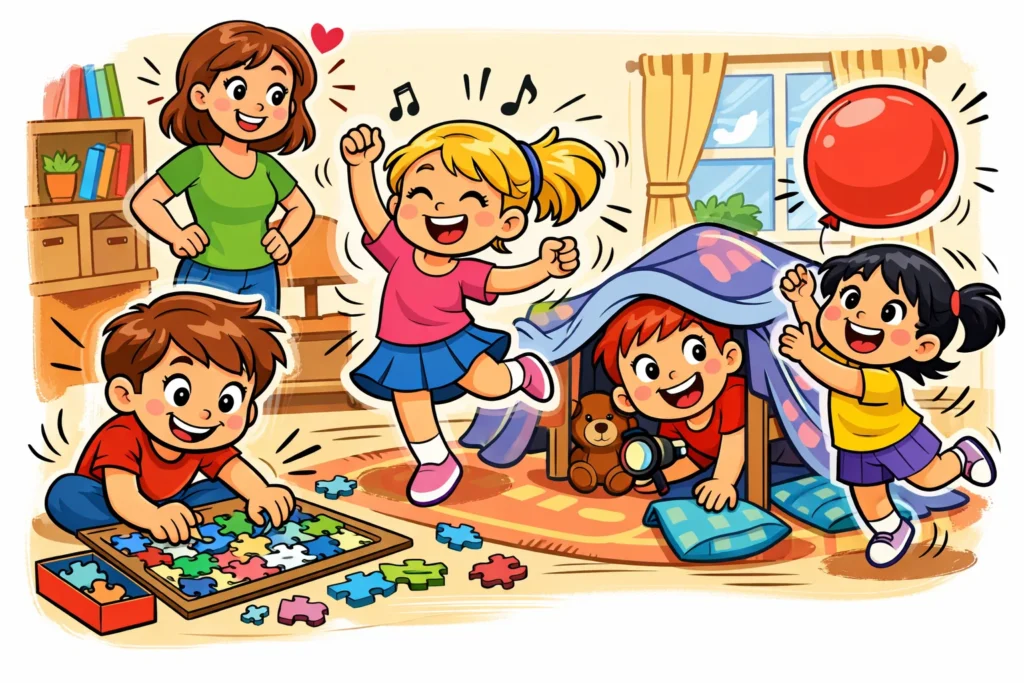
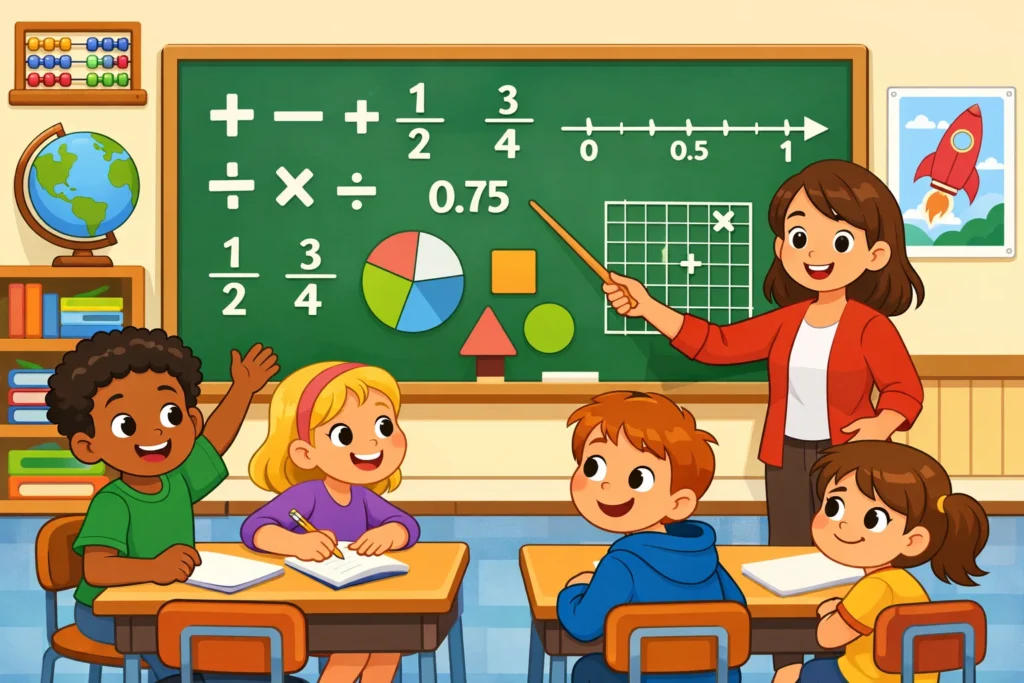
Engaging young learners in well-designed preschool activities helps build a strong foundation for future school success. Research in early childhood education shows that high-quality learning activities can support literacy, early math, fine motor skills, creativity, science exploration, and social-emotional growth. Whether used at home, in a preschool classroom, a nursery, or an early years setting, hands-on preschool activities can support cognitive growth during important early developmental stages. A balance of structured and unstructured play helps make learning engaging, enjoyable, and developmentally appropriate for young children.
Key takeaways
- Holistic development: Effective preschool learning activities combine cognitive, physical, and emotional skill-building.
- Play-based approach: Preschoolers learn new concepts best through experiential, hands-on activities rather than passive worksheets.
- Resource efficiency: High-impact activities for kids use simple, everyday household materials to reduce preparation time and cost.
- Evidence-informed guidance: These recommendations are informed by the National Association for the Education of Young Children (NAEYC) framework for developmentally appropriate practice.
Best activity mix
Early childhood education frameworks suggest that strong preschool plans include a variety of activity types to support healthy development. A balanced daily routine can include literacy activities, preschool math activities, physical activities, sensory play, art activities, and age-appropriate STEM concepts. A varied activity mix can help maintain engagement and reduce fatigue by alternating quiet, active, sensory, and social learning experiences. Offering a diverse range of activities at home or in school helps support different interests, skill levels, and developmental needs.
Skill coverage
To support healthy skill development, each preschool activity should build one or more foundational skills. The Center on the Developing Child at Harvard University notes that early experiences shape brain architecture, so activities should address specific developmental domains.
| Developmental domain | Targeted sub-skills | Measurable target |
| Communication and literacy | Vocabulary acquisition, phonological awareness, narrative comprehension | 5–10 new words introduced per week |
| Physical development | Fine motor control, pincer grasp, gross motor movement, bilateral coordination | Active play throughout the day |
| Cognitive development | Early counting, letter recognition, problem-solving, subitizing | Recognition of numbers 1–10 |
| Social-emotional growth | Turn-taking, emotional regulation, peer cooperation, self-advocacy | Sustained cooperative play for up to 15 minutes |
Easy setup tips
Creating engaging hands-on preschool activities does not require expensive commercial kits or intensive preparation. Preschool teachers frequently use household items such as blocks, playdough, pom-poms, buttons, paper, chalk, water, recycled boxes, and kitchen tools to design rich learning opportunities. Using versatile, open-ended materials allows children to lead their own discovery while keeping costs low for parents. Storing these items in accessible bins makes daily cleanup efficient and encourages organizational skills in preschoolers.
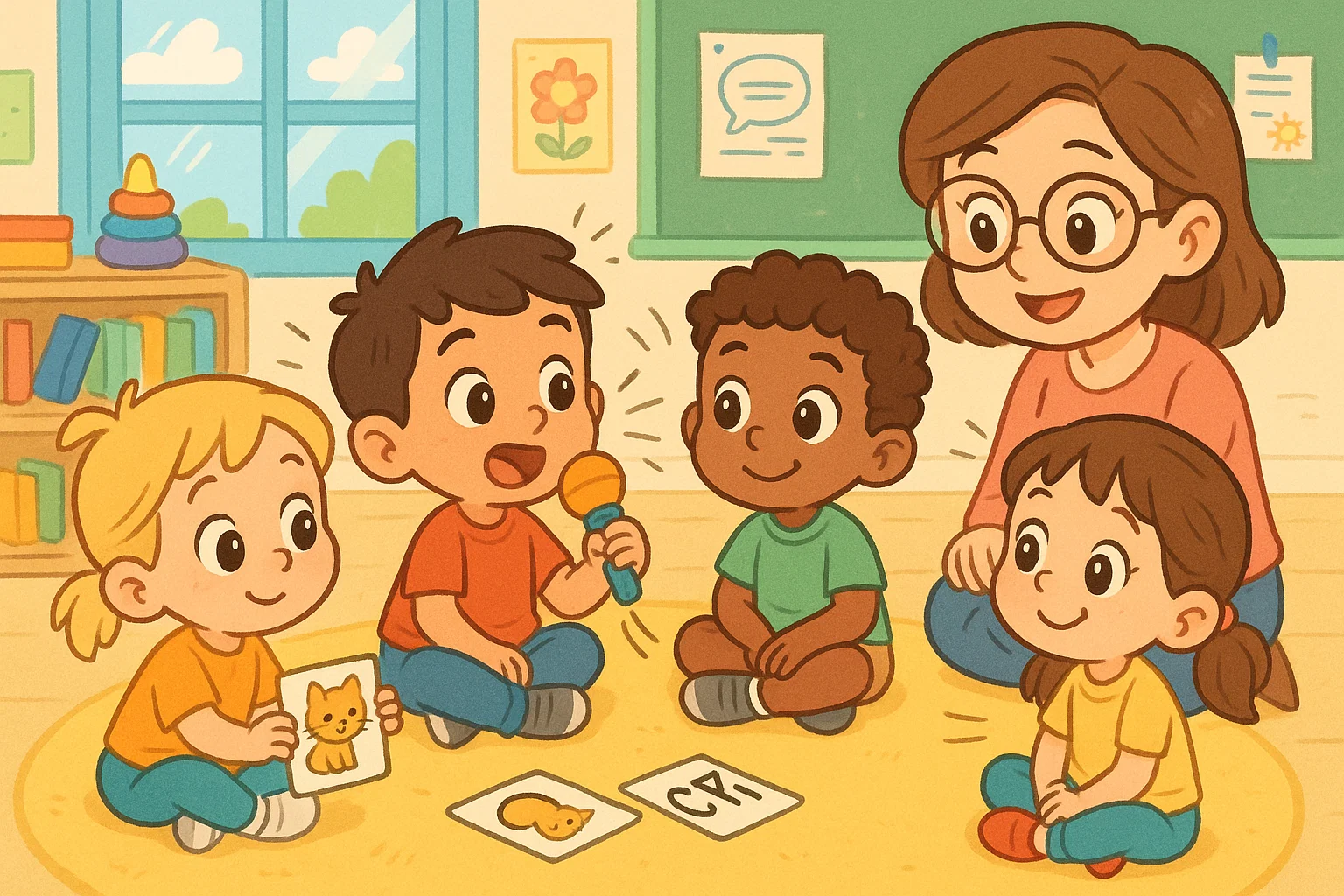
Preschool activities for reading and language
1. Read aloud daily
Daily interactive read-alouds build vocabulary, listening comprehension, attention span, and story memory. The American Academy of Pediatrics (AAP) recommends shared reading beginning at birth and continuing at least through kindergarten, and read-alouds can expose children to richer vocabulary than everyday conversation. Adults can make this activity more effective by asking simple prediction and recall questions during the reading session.
2. Letter races
Letter races combine movement with alphabet practice by placing letter cards around a room. Preschool teachers or parents call out a specific letter or letter sound, prompting preschoolers to run, hop, or crawl to the matching card. Incorporating uppercase and lowercase variations helps children build visual discrimination skills necessary for future reading fluency.
3. I spy sound
The game “I Spy Sound” targets phonological awareness by focusing on beginning sounds rather than visual clues. An adult initiates the activity by stating, “I spy with my little eye something that starts with the sound /b/.” Preschoolers then search the immediate environment for items like books, balls, or blocks, strengthening early literacy skills.
4. Alphabet bingo
Alphabet Bingo modifies the traditional matching game by using grids containing target letters, phonetic sounds, or corresponding object pictures. This structured game format improves letter recognition, active listening, and turn-taking in small groups of preschoolers. The game also encourages auditory processing, visual scanning, and quick recognition.
5. Letter parking lot
The Letter Parking Lot activity integrates pretend play with literacy activities for preschoolers by using a drawn grid on cardboard. Adults label each drawn parking space with a target letter, and preschoolers are instructed to park corresponding toy cars labeled with matching letters. This tactile method helps preschoolers develop spatial awareness alongside alphabet recognition.
6. Sensory letter hunt
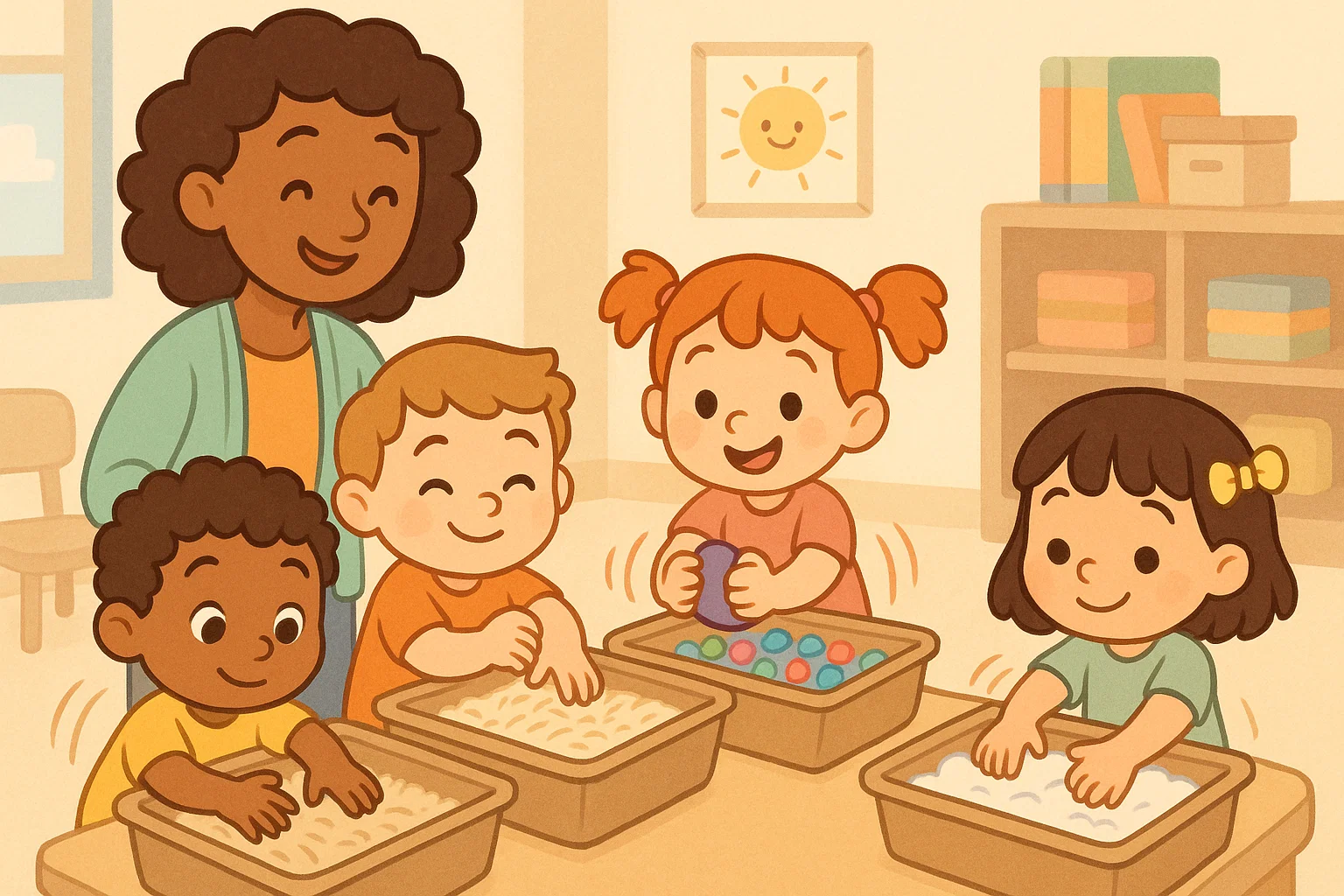
A sensory letter hunt involves hiding foam or magnetic letters inside a textured material such as rice, sand, shredded paper, or another safe sensory filler. Preschoolers use their hands or scoops to dig out the letters, providing a tactile discovery experience that reinforces visual memory. This sensory activity turns repetitive alphabet practice into an engaging exploration game.
7. Match magnetic letters
Matching magnetic letters involves placing plastic alphabet pieces onto printed flashcards, custom name templates, or colorful object pictures. Parents can add sound practice by asking the child to say the sound of each letter as they place it on the card. This structured matching activity supports letter-sound correspondence and visual tracking.
8. Interactive writing
Interactive writing is a shared instructional experience where adults and preschoolers compose short text together, such as shopping lists, labels, or bedroom signs. The adult models capitalization, spacing, and punctuation while allowing the child to write familiar letters or letter-like strokes. This collaborative method illustrates the direct connection between spoken words and written language.
9. Pretend mail letters
Pretend mail letters use a home or classroom post office setup equipped with envelopes, name tags, play stamps, and cardboard mailboxes. This dramatic play theme increases writing motivation as preschoolers scribble notes, sign their names, and deliver messages to peers or family members. It gives children an authentic reason to practice functional literacy.
Preschool activities for rhyming and phonics
10. Matching rhymes
Matching Rhymes uses picture cards with rhyming word pairs, such as cat-hat, dog-log, or frog-log, to develop auditory discrimination. Preschoolers sort through a mixed deck to match rhyming pairs, helping them notice similar word endings. Building this kind of sound awareness supports later phonics and decoding work.
11. Rhyming with blocks
Rhyming with blocks requires taping distinct picture labels onto plastic or wooden building blocks. Preschoolers are challenged to build towers exclusively by stacking block pairs that rhyme with one another. This hands-on preschool activity links physical balance and spatial coordination with patterns in spoken language.
12. Rhyme time
Rhyme Time is an auditory language activity focused on singing traditional nursery rhymes, completing broken rhyming phrases, and inventing silly nonsense words. Engaging in oral rhyming games allows children to experiment with speech sounds, rhythm, and intonation without print-based pressure. Rhyming practice can support phonological awareness, which is closely connected to later reading development.
13. Phonics hopscotch
Phonics Hopscotch turns outdoor play into a literacy activity by replacing the traditional numbers in a hopscotch grid with chalk-drawn letters or phonemes. Children jump, skip, or leap into the specific letter squares called out by the supervising adult. This gross motor activity connects literacy practice with movement, which can be especially helpful for children who stay engaged through active play.
14. Syllable head and shoulders
Syllable Head and Shoulders requires children to physically tap their heads, shoulders, knees, and toes to match the spoken syllables in words. For example, the name “Sa-man-tha” receives three distinct taps from top to bottom. This rhythmic activity breaks speech into manageable sound segments, supporting phonological processing.
15. Name writing practice
Name writing practice focuses on multisensory approaches such as tracing, building, stamping, or painting a child’s name using large templates. Before introducing thin pencils, preschoolers can use playdough, finger paint, or stickers to trace the shapes of their own names. This personalized activity supports a child’s sense of identity while reinforcing early fine motor control.
Preschool math activities
16. Number safari
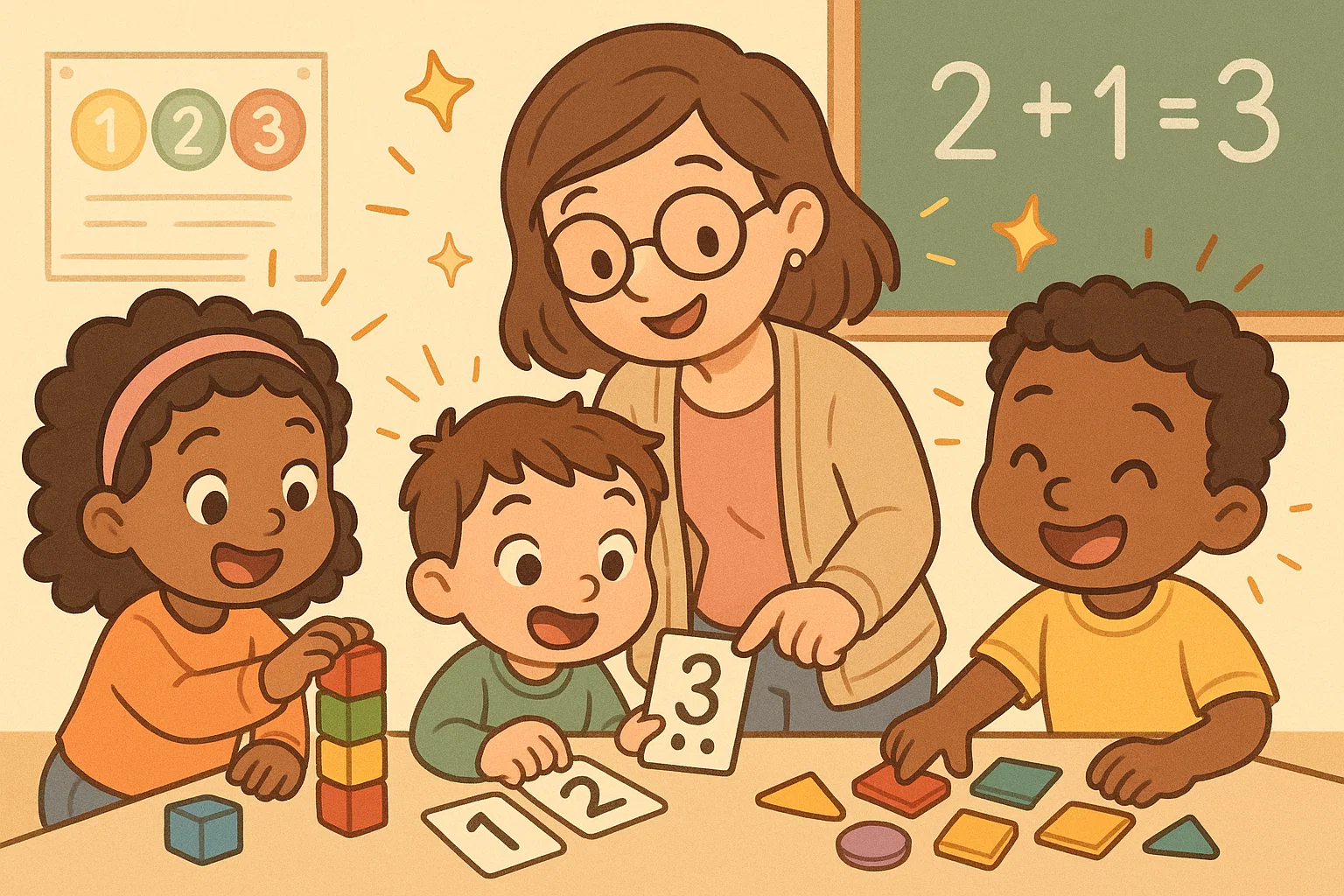
Number Safari is an active learning game in which hidden numeral cards are scattered around a room, yard, or outdoor play area. Preschoolers find the target numbers and return them to a base station to arrange them in ascending order from 1 to 10. This physical search activity improves number identification skills and teaches sequence concepts.
17. Counting mats
Counting mats use laminated paper grids alongside small themed items like mini erasers, buttons, counting bears, blocks, or edible snacks. Preschoolers read the printed numeral on the mat and count out the corresponding number of items onto the designated spaces. This tactile math activity for preschoolers establishes a concrete connection between abstract numbers and physical quantities.
18. Number matching with cars
Number Matching with Cars pairs numbered toy vehicles with corresponding parking spots drawn onto poster board or labeled with quantity dots. Preschoolers look at the number of dots on a parking space and select the car with the matching numeral. This visual matching helps preschoolers build subitizing, the ability to recognize small quantities at a glance.
19. Play shop
Play Shop sets up a dramatic play environment featuring household grocery items, custom price tags, toy cash registers, and play coins. Preschoolers engage in early math by sorting play foods, counting coins, and exploring addition and subtraction in context. This social game demonstrates the real-world utility of counting and sorting systems.
20. Guess the weight
Guess the Weight challenges preschoolers to evaluate the relative heaviness or lightness of everyday household items using their hands or a simple balance scale. Children categorize items like rocks, feathers, apples, and sponges into comparative groupings based on tactile feedback. This foundational preschool science and math activity introduces measurement language and the concept of mass.
21. Compare hands and feet
Comparing hands and feet involves using nonstandard measurement units, such as plastic blocks, linking cubes, or yarn, to measure body parts. Preschoolers trace their hands or feet on paper and count how many blocks are required to span the entire length of the drawing. This activity introduces spatial geometry, comparison vocabulary, and linear measurement logic.
22. Mini eraser ten-frames
Mini Eraser Ten-Frames use structured 2×5 grid cards to organize small counting tokens such as erasers or beads. Filling ten-frames helps preschoolers build a visual model of 10, supporting subitizing and early addition readiness. Ten-frame activities can support early number sense and prepare children for kindergarten arithmetic.
23. Roll and count dice game
The Roll and Count Dice Game requires children to roll an oversized foam die, identify the dot pattern, and count out a corresponding number of tokens. Preschoolers apply the rolled value by creating matching sets using stickers, playdough dots, or linking blocks. This repeatable game reinforces one-to-one correspondence by encouraging children to count each item exactly once.
Preschool sorting, matching, and pattern activities
24. Sorting box
A Sorting Box uses divided containers, such as plastic storage trays, cardboard boxes, or metal muffin tins, to organize diverse mixed objects. Preschoolers examine an assortment of buttons or beads and sort them by attributes such as color, size, shape, or texture. Sorting activities help preschoolers build reasoning skills by requiring systematic categorization.
25. Sticker matching
Sticker Matching provides a fine motor activity where children peel themed stickers and place them onto pre-drawn target outlines. The activity sheets can be designed around color gradients, geometric shapes, matching numbers, or identical alphabet letters. This task builds visual discrimination skills while refining the finger dexterity needed for future pencil grip.
26. Fruit matching games
Fruit Matching Games use real fruit, realistic plastic miniatures, or picture cards to practice categorization and pairing. Preschoolers match whole fruits to their sliced halves or group items by skin texture, color, and inside appearance. This practical activity links food vocabulary and nutrition awareness with fundamental sorting skills.
27. Color sorting mats
Color Sorting Mats use vibrant fabric sheets or colored paper cards as landing zones for assorted small loose parts. Preschoolers use their fingers or plastic scoops to place mixed pom-poms, beads, blocks, or toy animals onto the corresponding color mat. This visually structured sorting activity reinforces color identification and spatial organization.
28. Pattern block challenges
Pattern Block Challenges prompt preschoolers to replicate, extend, or invent repeated visual sequences using geometric wooden or plastic tiles. Adults model simple patterns such as ABAB (red-blue-red-blue) or AABB (red-red-blue-blue), and children predict what color or shape comes next. Building patterns supports early algebraic thinking long before formal mathematics instruction begins.
29. Transportation dominoes
Transportation Dominoes uses DIY cardboard domino tiles featuring drawings or stickers of vehicles such as cars, trains, and buses. Preschoolers play the game by aligning identical vehicle categories end-to-end according to classic domino rules. This activity strengthens rule-following, visual scanning, and category matching.
30. Shape matching game
The Shape Matching Game asks children to identify 2D geometric cutouts and match them with everyday household objects or printed outlines. Preschoolers discover that a clock is shaped like a circle, a book is shaped like a rectangle, and a warning sign is shaped like a triangle. This exploration connects abstract geometry concepts to the child’s physical world.
Preschool fine motor activities
31. Picking up buttons
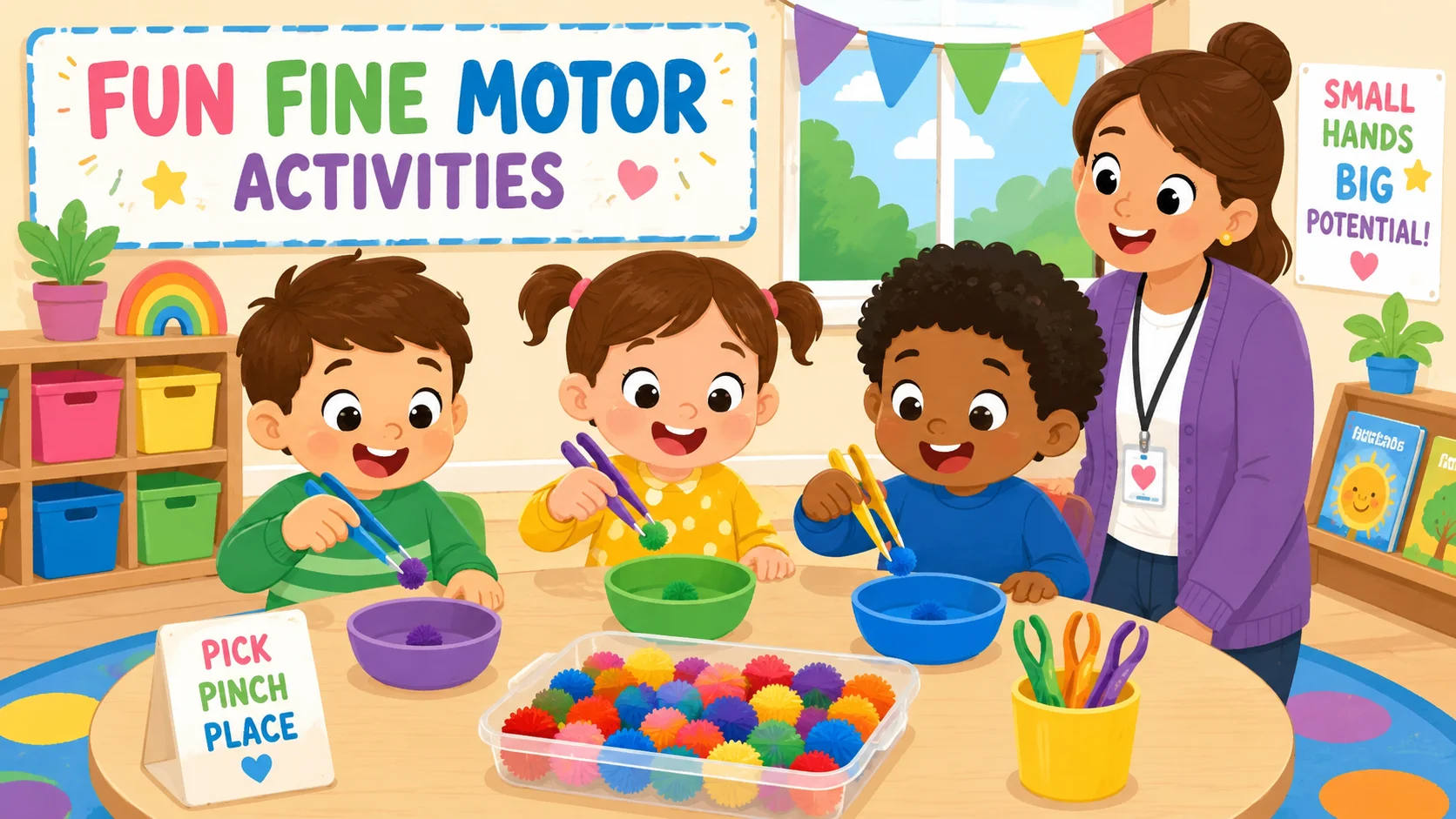
Picking up buttons requires preschoolers to use their thumb and forefinger, plastic tweezers, or kitchen spoons to collect various craft buttons. Children sort the collected items into small cups by color, size, shape, or number of holes. This focused task targets the pincer grasp, which is vital for holding writing utensils properly later in childhood.
32. Squeeze tweezers
Squeezing tweezers involves transferring soft pom-poms, foam beads, or cotton balls from a wide bowl into narrow-necked bottles. The resistance from plastic or metal tweezers helps build strength in the small muscles of the hands and fingers. Tweezer activities are often used to support bilateral coordination and hand endurance.
33. Pinch water droppers
Pinching water droppers asks children to use plastic pipettes to transfer colored liquid between small cups or trays. This fine motor activity requires controlled hand pressure and finger isolation to successfully suction and release the liquid. Integrating colored water turns this task into an art activity or preschool science exploration.
34. Hang laundry
Hanging Laundry uses a low twine clothesline, small fabric squares, or paper doll clothes alongside spring-loaded clothespins. Preschoolers pinch the pins open to secure the miniature clothing items onto the line to dry. The bilateral coordination involved in holding the paper with one hand while operating the clothespin with the other supports motor planning.
35. Feed monster
The Feed Monster activity uses a recycled tissue box or cardboard cylinder decorated to look like a creature with an open mouth. Preschoolers feed the monster specific items like pom-poms, letter cards, or shapes using tongs or their fingers. This playful pretend theme increases engagement while developing precision grip control.
36. Hide items in modeling clay
Hiding items in modeling clay involves pressing small beads, buttons, or plastic gems deeply inside dense clay or playdough blocks. Preschoolers must dig, pinch, pull, and squeeze the medium to locate and extract the hidden treasures. This resistance-based fine motor activity provides sensory input while strengthening finger joints.
37. Cut and paste
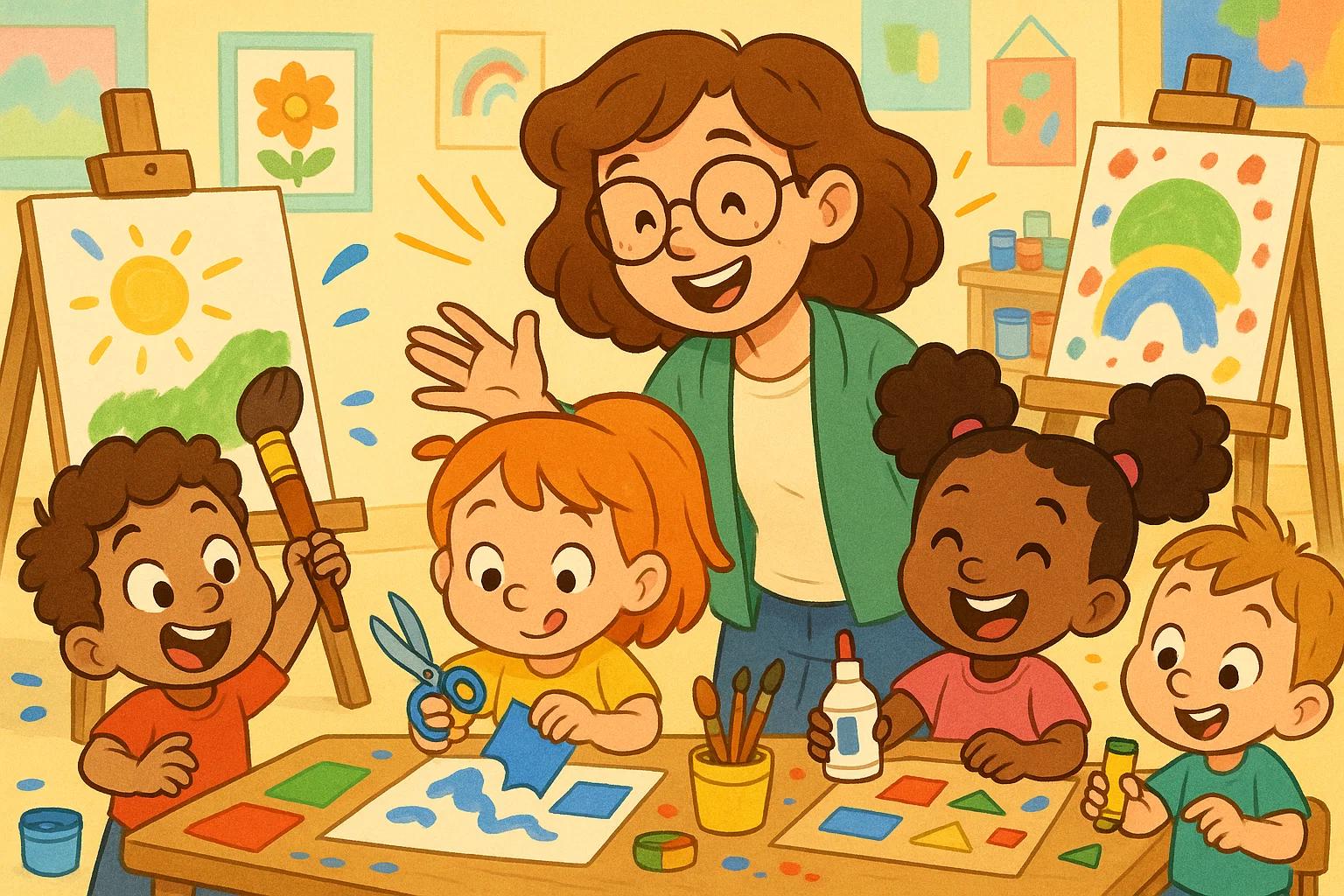
Cut-and-paste tasks introduce child-safe scissors alongside paper strips, thick lines, basic shapes, and collage backgrounds. Children practice holding the scissors correctly, with the thumb up, to snip paper edges before moving on to cutting continuous straight and wavy paths. This activity refines two-handed coordination and spatial judgment.
38. Play dough number mats
Play Dough Number Mats use laminated templates where preschoolers roll, press, and shape dough to form target numerals. Children create long dough “snakes” to trace number outlines and roll small dough balls to match counting sets. This tactile practice develops hand strength while reinforcing number recognition and early math skills.
Preschool gross motor activities
39. Chalk obstacle course
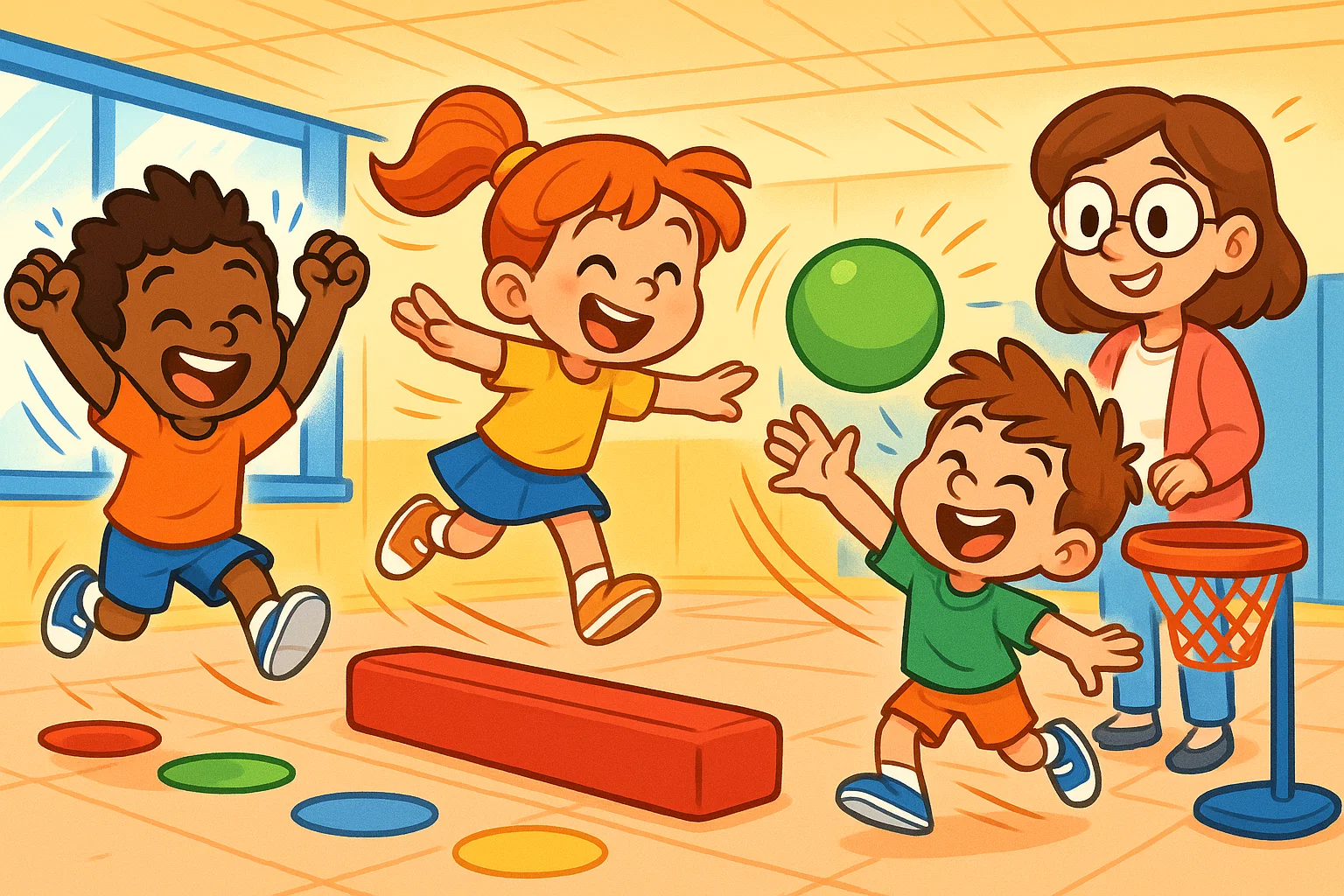
A Chalk Obstacle Course uses outdoor pavement drawings to prompt a sequence of physical movements like jumping, balancing, spinning, and leaping. Preschool teachers can draw zigzag paths to walk on, target circles to hop into, and handprints showing where to stop and pose. This structured outdoor activity develops gross motor coordination, spatial planning, and physical stamina.
40. Body bridges
In Body Bridges, preschoolers work alone or with a partner to arch their backs, lift their hips, or stretch their limbs to form bridge-like structures. Other children can drive toy cars or crawl carefully underneath these human tunnels and bridges. This movement builds core strength, body awareness, and teamwork skills.
41. Farm-themed yoga
Farm-Themed Yoga introduces basic stretching and balance poses modeled after familiar animals like cows, horses, chickens, frogs, and butterflies. Children hold these positions while mimicking animal sounds, connecting creative pretend play with physical flexibility. Regular yoga play helps preschoolers develop balance, body control, and mindfulness strategies.
42. Indoor relay races
Indoor Relay Races use low-risk, spacious setups where children carry beanbags, soft balls, or plastic cups around marker cones. Preschoolers can vary their movements by walking backward, sidestepping, or balancing a scarf on their heads during their turn. Relay games teach group turn-taking dynamics alongside cardiovascular physical fitness.
43. Cross river
Cross River turns the floor into an imaginary river, using cushions, paper plates, or plastic hula hoops as stepping stones. Preschoolers step carefully from one safe surface to the next without touching the floor beneath them. This balance game refines dynamic stability, distance evaluation, and motor planning skills.
44. Balance beam walk
The Balance Beam Walk uses low floor lines made from brightly colored painter’s tape, thick rope, or flattened cardboard. Children walk heel-to-toe along the path without stepping off the edges, sometimes carrying a small toy to increase the challenge. This simple physical development activity builds vestibular balance and concentration.
45. Hula-hoop islands
Hula-Hoop Islands starts by placing plastic hoops across the play area while upbeat music plays. Preschoolers dance or walk around the perimeter of the hoops, leaping into the nearest “island” hoop the exact moment the music stops. This active listening game builds auditory processing, response speed, and spatial awareness.
46. Land, sea, air
Land, Sea, Air is a fast-paced listening game in which the floor is split into three labeled zones using tape or markers. An adult calls out commands like “Sea!”, prompting children to jump into the designated middle zone quickly. When children jump to the wrong zone, they pause briefly, which helps practice executive function, response inhibition, and auditory focus.
Preschool sensory activities
47. Sensory winter tray
A Sensory Winter Tray creates a winter theme by filling a flat container with white cotton balls, real ice cubes, snowflake cutouts, and plastic scoops. Preschoolers handle the varied temperatures and textures, expanding their descriptive winter vocabulary through hands-on play. This open-ended exploration encourages descriptive language and can introduce simple observations about melting and temperature.
48. Water play station
A Water Play Station uses a water table or shallow plastic bin filled with water, along with funnels, measuring cups, and floating objects. Children pour, scoop, and splash while discovering buoyancy, capacity, and fluid motion. Water play can also be calming for many high-energy preschoolers.
49. Water bead sensory play
Commercial water beads are not recommended for preschool sensory play because they can pose serious ingestion and choking hazards. Safer alternatives include cooked tapioca pearls, jelly cubes, cooked pasta, or pom-poms used with close adult supervision. These alternatives provide rich tactile feedback as children squeeze, scoop, and sort the materials.
50. Rice or popcorn sensory bin
A Rice or Popcorn Sensory Bin uses a large storage container filled with dried colored rice or unpopped corn kernels as the base material. Preschool teachers can bury themed objects such as plastic jungle animals, magnetic letters, or number tokens for children to find. This preschool sensory staple supports fine motor skill development and tactile differentiation.
51. Ocean sensory bottle
An Ocean Sensory Bottle is made by filling a clear plastic bottle with water, blue food coloring, glitter, mineral oil, and small sea figures. Adults seal the bottle cap securely using hot glue or heavy duct tape to prevent accidental spills or ingestion. Preschoolers tip and roll the container to watch the wave-like motion, using it as a calming visual tool.
52. Foam shape sensory bag
A Foam Shape Sensory Bag provides a mess-free tactile experience by sealing colorful foam shapes with clear hair gel or washable paint inside a heavy-duty zip-top bag. The edges are taped securely to a table surface, allowing preschoolers to push, trace, and slide the shapes through the gel medium. This design can be helpful for children who are sensitive to wet textures.
53. Night sky sensory bin
A Night Sky Sensory Bin uses a dark base material, such as black beans or shredded dark paper, mixed with metallic stars and plastic moons. Preschoolers use spoons and shiny cups to scoop the materials while creating imaginative stories about space travel. This activity sparks creative storytelling and narrative language skills.
Preschool art and craft activities
54. Handprint art
Handprint Art uses nontoxic, washable tempera paint applied to a child’s palm to press shapes onto thick paper. Preschoolers transform these prints into seasonal designs or animal shapes, such as turkeys, fish, or trees, by adding details once the paint is dry. This classic craft provides sensory input while giving adults a chance to name body parts and discuss color mixing.
55. Spaghetti painting
Spaghetti Painting uses cooked, cooled pasta strands as unconventional brushes for creating textured marks and patterns. Preschoolers dip the flexible noodles into shallow paint trays and drag, swirl, or drop them across large paper sheets. This art activity fosters creative experimentation and sensory processing without requiring rigid tool precision.
56. Painting with sponges
Painting with Sponges uses different household sponges cut into geometric shapes, alphabet letters, or abstract textures. Children dip these pieces into washable paint and stamp them onto paper, observing how colors blend when prints overlap. Sponge stamping builds grip control while reinforcing patterns and spatial awareness.
Preschool activity planning tips
Choose age-appropriate materials
Adapting preschool activities for 3-, 4-, and 5-year-olds helps prevent frustration and provides appropriate support. Three-year-old children benefit from large, simplified tools and single-step sorting tasks due to developing motor control. Five-year-olds can often handle multi-step instructions, smaller counting tokens, and more detailed scissor patterns that challenge their problem-solving skills.
Keep sessions short
Young children often stay engaged when learning activities are delivered in brief, structured intervals tailored to their attention span and energy level. Most preschool learning activities achieve the highest engagement when kept within 10- to 20-minute windows, depending on the child’s current energy level. Ending a task before boredom or exhaustion sets in helps preserve a positive association with educational play.
Mix quiet and active play
Maintaining behavioral regulation throughout the day requires a deliberate balance between sedentary, high-focus tasks and high-energy physical activities. Preschool plans should alternate structured reading time or fine motor sorting with outdoor activities, musical dance breaks, or sensory play. This deliberate pacing supports young children’s natural fluctuations in attention and energy.
Add skill goals
Every selected preschool activity can be linked to a simple, measurable developmental goal to support intentional progress tracking. Goals can be as straightforward as asking a child to count up to five tokens, identify three primary colors, or practice taking turns with a peer. Documenting these micro-milestones helps parents and educators identify areas where a child may need extra support.
Supervise sensory and food activities
Maintaining a safe learning environment requires constant adult vigilance when hosting sensory bins, craft projects, or water-based activities. Small sorting items such as buttons, beads, and raw beans pose choking hazards, especially for children who still explore objects with their mouths. Regular safety checks for food allergies, sharp edges, and water depth help keep play low-risk and supportive.
FAQ
What are the best learning activities for preschool?
The best learning activities for preschool combine play, movement, conversation, and hands-on exploration. Preschoolers need opportunities to build language, early math, fine motor control, problem-solving skills, and social confidence through real experiences. The 56 preschool activities in this guide are designed to make learning fun while supporting age-appropriate development during the preschool years.
How can I make learning fun for my little one?
To make learning fun for your little one, keep activities short, playful, and connected to everyday life. Counting spoons while setting the table, sorting laundry by color, reading aloud, or creating a simple scavenger hunt can all turn daily routines into fun learning moments. Play is the best way for preschoolers to stay engaged while practicing new skills.
What are some fun preschool activities at home?
Fun preschool activities at home include counting mats, pretend play, sensory bins, alphabet games, sponge painting, water play, and simple obstacle courses. These activities are fun and easy to set up with common household items, making them ideal for parents who want practical activity ideas without expensive materials. Preschoolers will love activities that let children move, touch, build, sort, and explore.
What preschool alphabet activities help with early reading?
Preschool alphabet activities such as letter races, alphabet bingo, sensory letter hunts, name tracing, and phonics hopscotch help children recognize letters and connect them with sounds. These preschool games work best when they feel playful rather than worksheet-based. Fun preschool learning activities that combine letters with movement or sensory play can support early learning without creating pressure.
Take a short quiz to find out what your everyday choices say about your parenting style
When your child is curious about something new, what’s your instinct?
Take a short quiz to find out what your everyday choices say about your parenting style
“Can I download this app?” What happens next?
Take a short quiz to find out what your everyday choices say about your parenting style
When it comes to rules at home, which sounds most like you?
Take a short quiz to find out what your everyday choices say about your parenting style
If you could give your child one life skill today, what would you pick?
Take a short quiz to find out what your everyday choices say about your parenting style
Your child gets to choose what to watch. What would your ideal setup look like?
Take a short quiz to find out what your everyday choices say about your parenting style
Pick your parenting superpower ✨