Colors and Shapes for Toddler Success: Fun Ways to Teach Basic Shapes and Help Kids Learn with Games and Activities

 Discover a Free Education Video App for Kids
Pastory uses AI to personalize educational video content based on your child’s interests and personality. Safe, engaging, and built for curious young minds. Sign up now to stay updated and enjoy early access with a free trial
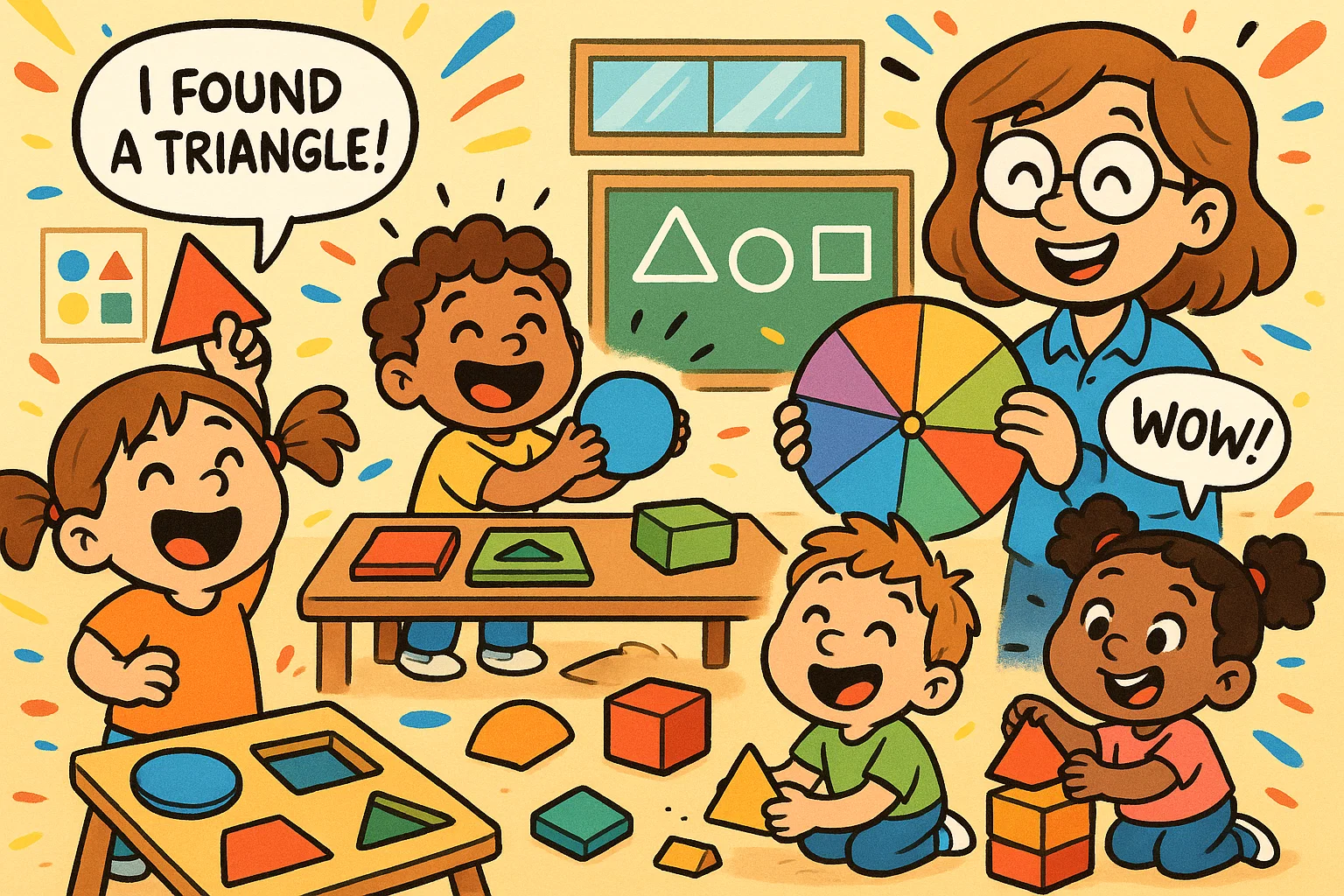
Embarking on the early childhood journey with your toddler or preschooler is an exciting and rewarding experience. The foundational years—from age 2 to five—are a period of rapid cognitive and motor development. The “Colorful Minds” program is designed not only to teach the fundamentals of shapes, colors, and early number concepts, but also to spark a lasting enthusiasm for playful learning and exploration.
This educational adventure turns essential early concepts into engaging, hands-on activities, showing that the most meaningful learning happens through play. By emphasizing sensory input, movement, and imagination, the program helps children naturally master basic shapes and colors while building key skills such as problem-solving, fine motor coordination, and early mathematical thinking. These practical, proven activities offer a joyful and effective path to early learning success.
Key Skills for Early Learning Development
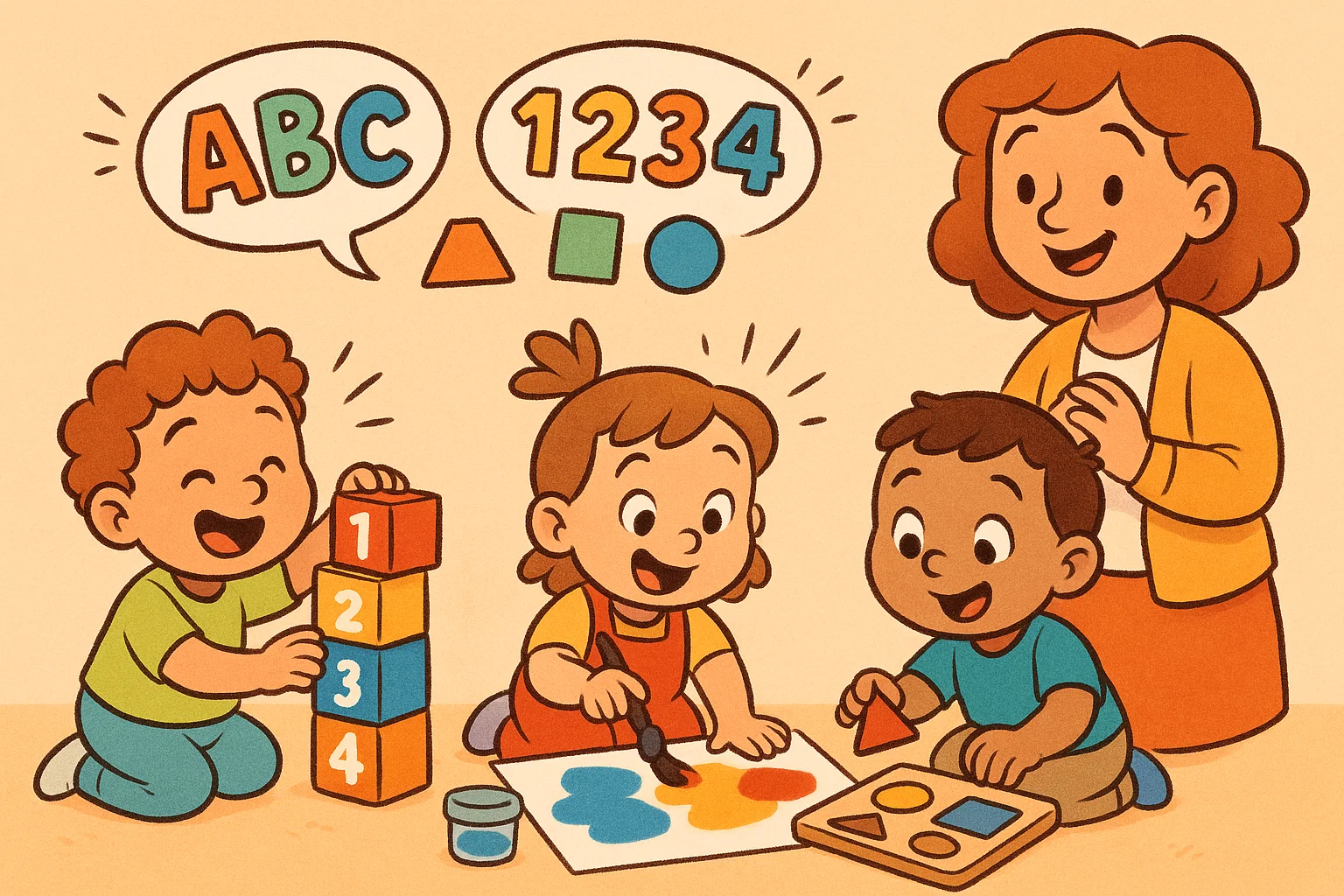
Building a strong foundation in preschool requires a holistic approach that stimulates multiple areas of the brain. The core components of a quality early learning experience should weave together cognitive, physical, and creative development. These interconnected skills support rapid cognitive development and prepare kids to learn more advanced concepts later on.
- Shapes: Learning to identify shapes and categorize objects based on their shape is the beginning of geometry and logical classification.
- Colors: Mastery of primary colors and their variations strengthens visual perception and descriptive language.
- Numbers: Developing number sense through early counting, sequencing, and quantity comparison.
- Literacy: Exposure to the alphabet and phonetic sounds for pre-reading skills.
- Sensory Play: Engaging the senses (touch, sight, sound) to deepen neural connections.
- Creativity: Encouraging self-expression and imaginative thinking.
Colors
The visual world bursts open as a child begins to differentiate between hues. Teaching colors to your toddler is a fantastic way to help your child learn to focus and build strong memory skills. Kids explore and learn to name the colours by interacting with their environment. Activities that involve matching colored objects, like sorting red blocks with other red items, or simply asking, “what is the colour of the apple?” reinforce this knowledge. Consistency and repetition are the best ways to teach colors and help them master this vibrant vocabulary.
Shapes
Recognizing form is more than just naming a circle or a square; it profoundly impacts a child’s ability to navigate the world. Recognizing the basic shape of objects helps them understand spatial relationships, which is a precursor to skills like reading and advanced mathematics. When a child learns to differentiate between different shapes, such as a triangular roof and a rectangle door, they are building early geometry skills. Start with simple shapes like squares, circles, and triangles, and gradually introduce various shapes as they progress. Spotting geometry in everyday objects is the most effective and fun way to teach this concept.
Numbers
Introducing numbers in a playful context builds foundational math skills. Early counting and understanding quantity comparison are essential elements of problem-solving. Start by teaching your child to learn simple one-to-one correspondence—counting fingers, grapes, or steps. The focus is not on rote memorization, but on building a solid number sense by understanding what each number represents. The program introduces early math concepts through songs and counting rhymes.
Letters
While the main focus is on shapes and colors, early literacy exposure is a beneficial element. The structure of letters (e.g., the circular form of an ‘O’ or the triangle of an ‘A’) naturally connects back to learning shapes. Phonics games and simple alphabet play introduce the sounds and forms of letters, laying the groundwork for reading readiness without pressure.
Nursery Rhymes
The repetitive patterns and rhythm found in nursery rhymes are a powerful tool for cognitive and language development. The predictability of the verses boosts memory and attention span. Hearing new words in a predictable sequence helps children learn cadence and language structure, which is crucial for overall communication skills.
Songs
Musical activities, particularly those with simple actions, improve motor skills and engagement. Learning songs with accompanying movements strengthens the mind-body connection and enhances memory recall. When you sing with your child, you create a joyful, memorable learning opportunity that sticks.
Sensory Activities
Multi-sensory learning is a cornerstone of effective early education. Sensory activities that involve touch, sight, and sometimes smell or taste, create richer, more durable memories. Tactile exploration, like squishing playdough or sifting through a bin of dried beans, also significantly helps develop fine motor skills and coordination, which are necessary for later tasks like writing and drawing.
Why Teach Preschoolers Shapes, Colors, Numbers
The concepts of shapes and colors are more than just academic; they are fundamental tools for navigating and understanding the world. Learning these concepts is an important to teach milestone that yields significant long-term developmental outcomes, preparing children for school and beyond.
Early Problem Solving
Problem-solving is strengthened through classifying and sorting. When a child has to categorize objects on the floor by color, then size, and then based on their shape, they are actively using logical reasoning. This practice in sorting helps kids learn how to organize information and approach tasks methodically.
Spatial Reasoning
Recognizing patterns and structures is the essence of spatial reasoning. Understanding that a two-dimensional rectangle can become a three-dimensional box, or seeing that certain form elements fit together, is what prepares kids to learn geometry and other STEM skills. As the child learns to manipulate and visualize forms, you help them understand the relationship between objects in space.
Categorization Skills
Grouping objects by criteria—whether by size, form, color, or number—is a key element of cognitive development. This process of sorting teaches children to see similarities and differences, an important skill for critical thinking. For example, asking your child to find all the objects that are red and round teaches them to apply multiple attributes simultaneously.
Counting and Patterns
Introducing basic math patterns through counting and sequencing is vital. Recognizing that 1, 2, 3 is a sequence or that red-blue-red-blue is a color pattern, shows children the predictability and structure of mathematics. This early exposure makes formal math lessons far less intimidating later on.
Early Literacy Connections
The connection between forms and letters is often overlooked. Letters are visual forms composed of lines and curves with specific orientations. The curved and straight lines used to draw shapes are the very same strokes used to form letters. This visual recognition of forms contributes directly to reading readiness.
Fun Ways to Teach Shapes, Colors, Numbers
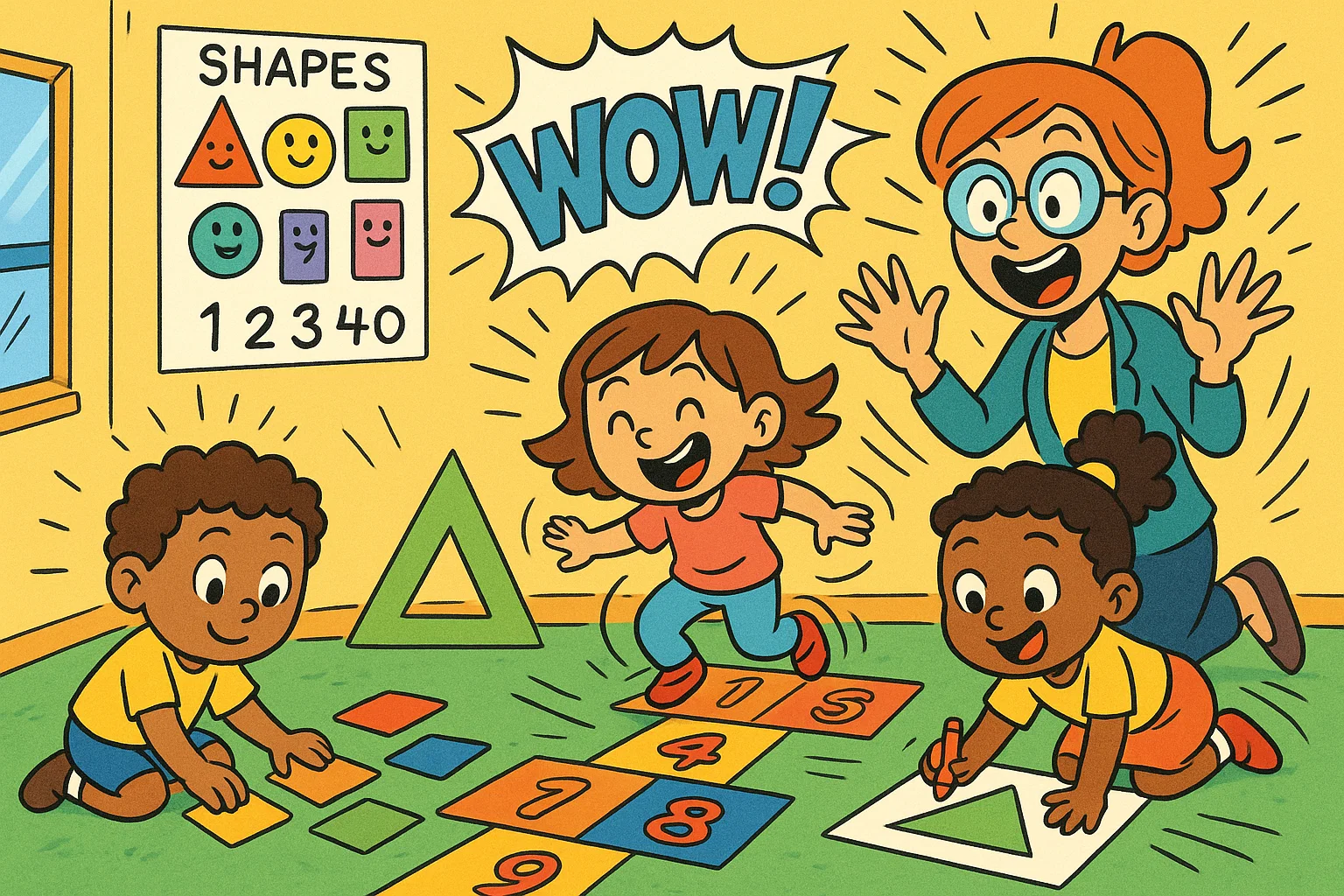
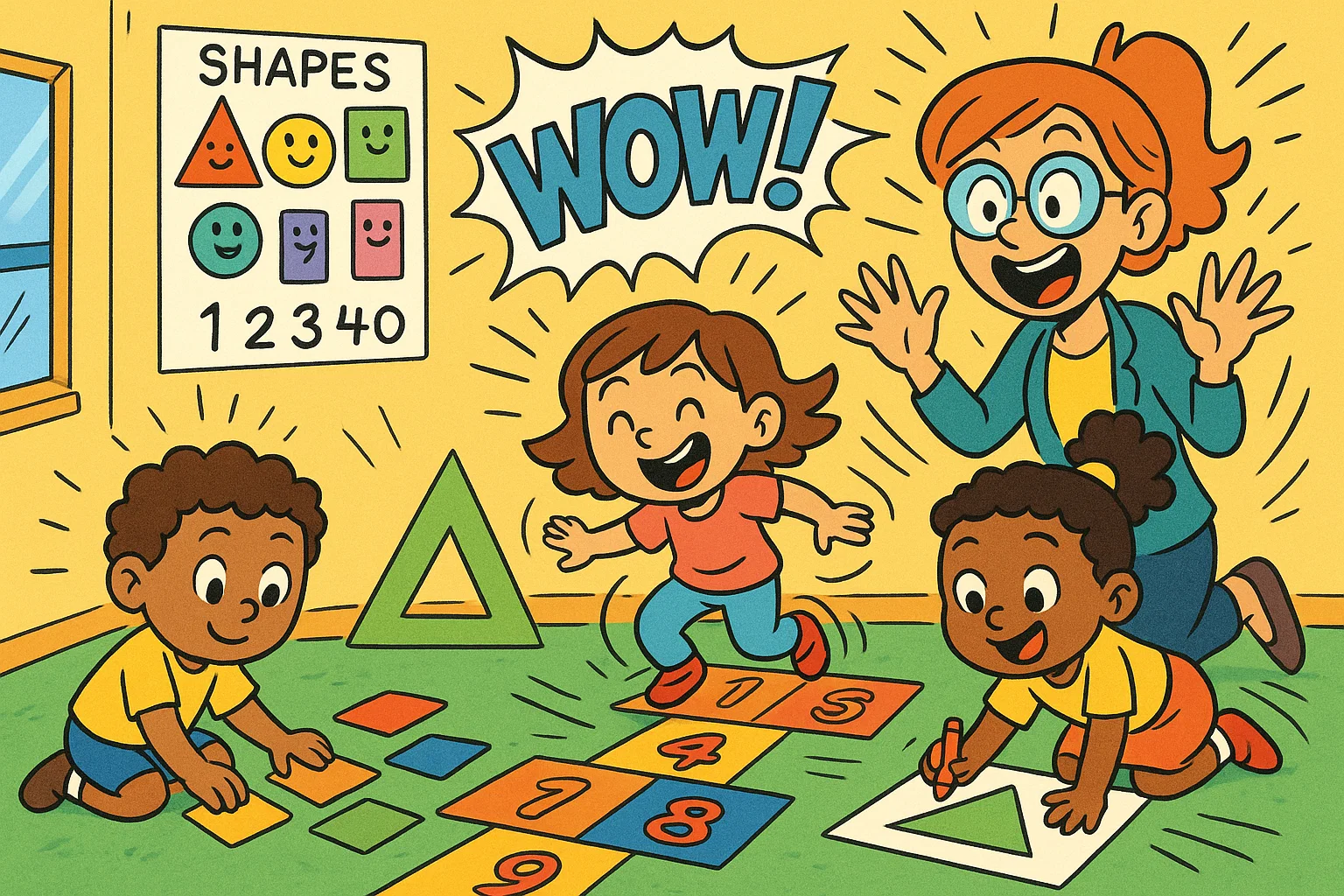
The best way to help your child learn is to make learning an enjoyable, low-pressure experience. Fun ways to teach the curriculum should integrate seamlessly into everyday life and play.
Playdough Shapes
Playdough is an incredible medium for hands-on learning. Help your child use cookie cutters to make shapes like a circle, a triangle, and a square, or simply create forms with their hands. This tactile activity not only reinforces the name of the basic shape but also significantly helps develop fine motor skills. You can then ask your child to name the form they created.
Flashcard Games
Use simple, colorful flashcards to play fun games. Start with the primary colors and simple shapes. Lay a few cards down and ask your child to match a red block to the red card, or to find the rectangle card. For a memory challenge, turn the cards over and have them remember where a specific form is located.
Shape and Color Hunt
This is a favorite! Turn learning shapes into a game: “Hunt for shapes!” Ask your child to find an object in the house that is the same basic shape as a plate (circle). Alternatively, ask them to find five things that are blue. This connects abstract concepts to the real world and provides countless learning opportunities. This is one of the most effective activities to teach shapes and colors.
| Basic Shape | Everyday Object Examples | Skill Reinforced |
| Circle | Plate, Clock, Coin, Ball | Visual Recognition, Sorting |
| Square | Window, Cracker, Block, Cushion | Spatial Reasoning |
| Triangle | Roof, Piece of Pizza, Yield Sign | Early Geometry |
| Rectangle | Door, Book, Cereal Box, TV Screen | Classification |
Sorting Activities
Sorting is a powerful cognitive tool. Gather a collection of small toys, buttons, or blocks. Ask your child to sort them first by color, then by basic shape, and finally by size. This action strengthens their ability to categorize and understand attributes. You can even ask them to name the criteria they are using to sort.
Finger Painting
Finger painting is an excellent way to teach your child about color mixing and tactile exploration. As they mix blue and yellow to see green, they are engaging in a foundational science experiment. This activity boosts creativity and tactile development while improving the small muscles in their hands.
Building Shapes with Everyday Materials
You don’t need expensive toys to help kids learn. Use materials like cotton buds, straws, pretzel sticks, or LEGO blocks to build geometric forms. Creating the outline of a square or a triangular form with these materials physically demonstrates the properties of many shapes, like having three sides or four corners. This is an effective example of the ways to teach spatial thinking.
Creative Shape and Color Activities
Moving beyond basic play, these activities to teach shapes integrate art, sensory exploration, and creative crafts to deepen the learning experience.
Shape Books
Reading books that focus on shapes and colors is excellent. Even better: make your own! Cut out various shapes from colored paper and glue them onto pages. Help your child label them. This DIY project is a fantastic memory aid and a great way to reinforce recognition of shapes like squares and circles.
Shape Snacks
Food is a wonderful, highly engaging teaching tool. Cut sandwiches into triangular halves or use cookie cutters to create shapes like squares from cheese or fruit slices. When the child eats the shape snacks, ask them to name the geometric form first. Teaching colors and forms through eating makes the concept memorable and enjoyable.
Sensory Shape Bin
Fill a bin with dried rice, beans, or pasta, and hide colored foam shapes like stars and squares inside. The child digs through the bin to find and sort the items by color or form. This engaging activity promotes early learning and significantly helps develop fine motor skills.
Block Painting and Sponge Shapes
Use wooden blocks or sponges cut into different shapes (circle, rectangle, triangular) as stamps. Dip them in paint and let your child learn to stamp on paper. This simple action helps them visualize how a two-dimensional form creates a pattern and promotes visual recognition.
Rainbow Rock Shapes
Collect smooth rocks outside. Time with your child spent painting these rocks in primary colors and drawing simple shapes on them turns into a fun learning project. Once dry, they can be used for sorting games or as geometry markers in the garden.
Active Shape and Color Play
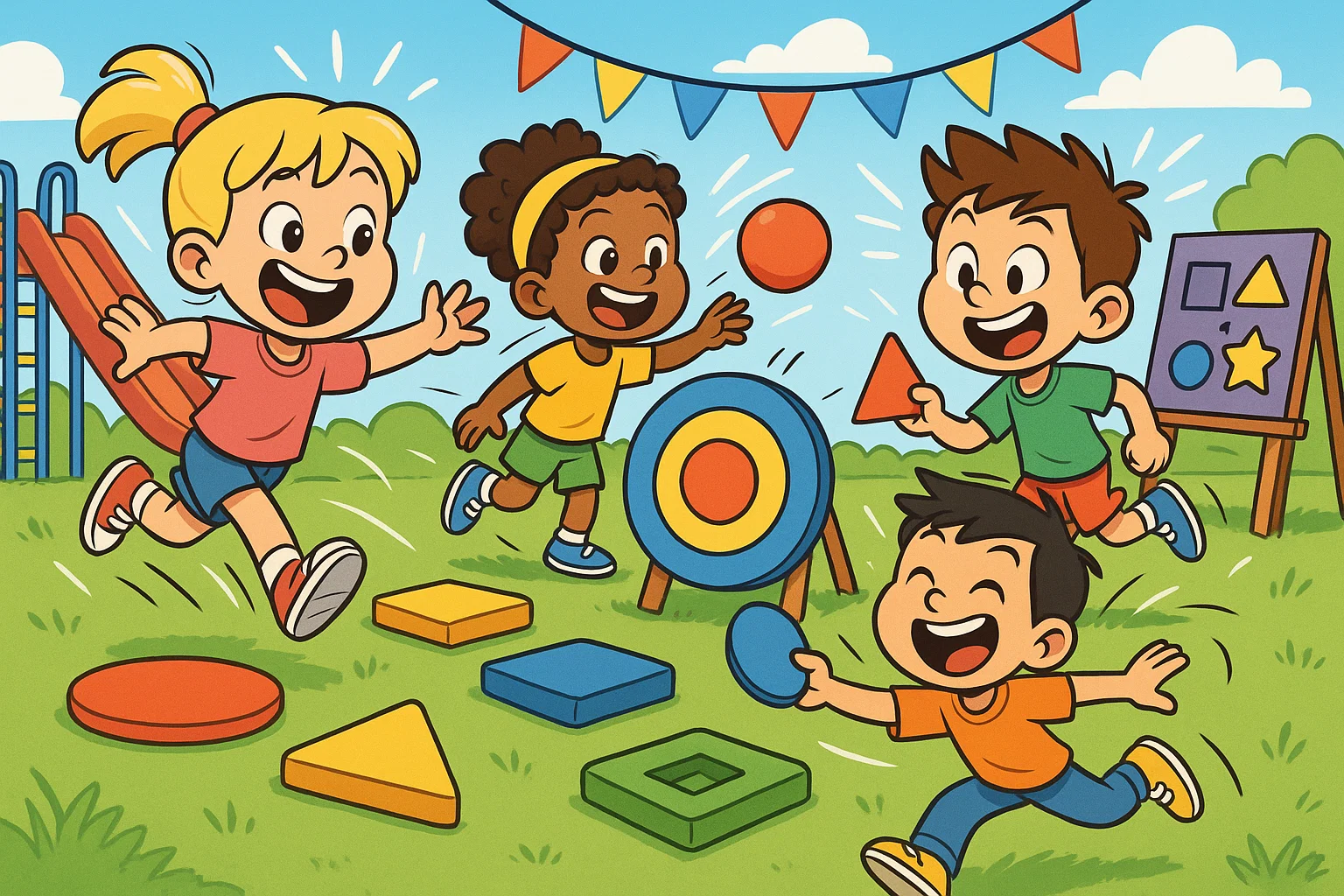
Incorporating movement enhances learning, as physical activity increases blood flow to the brain and helps solidify memory. These games and activities combine learning shapes with gross motor skills.
Shape Maze
Use masking tape on the floor to create a large path with different basic shape zones (a circle zone, a square zone). Help kids learn to navigate the maze by only stepping on a specific form as you call it out. The child must quickly identify shapes to complete the task.
Nature Walk Shape Edition
Take a nature walk and turn it into a hunt for shapes. Ask your child to find something that is a rectangle (like a trunk section), something round (a small stone), or something triangular (a leaf segment). This activity connects basic shapes to the geometric forms found in nature in the real world.
Shape Treasure Map
Design a very simple shape map. Draw a path that leads from a square to a circle, then to a triangle. The child follows the path, locating markers that match the forms on the map. This game reinforces form sequencing and problem-solving skills.
Shape Scavenger Hunt
Provide clues for objects based on their properties. For example: “Find something that is red and shaped like squares.” This requires the child to think about both color and shape attributes simultaneously.
Move with a Ball
Designate targets on the floor using large cutouts of different shapes or colored spots. Play with your child by having them throw or roll a ball onto a target you call out, such as “Roll the ball to the green triangle!” This combines physical coordination with learning shapes and colors.
Encouraging Exploration and Creativity
The most effective learning environment is one that values curiosity and allows the child to take the lead. This child-centered approach ensures the child will love to learn.
Embrace Spontaneous Play
Unstructured exploration is where the deepest learning often occurs. When your child is still stacking blocks, allow your child to experiment freely. They may spontaneously discover which complex shapes stack better than others, which is a form of intrinsic, spatial learning. Do not interrupt; observe and support.
Encourage Shape-Making
Ask your child to make shapes with their body—a round circle with their arms, or a triangular roof pose. This kinesthetic learning helps the body understand the concept of shape dimensions. They can also use their fingers or objects on the floor to trace or outline a form.
Extend Conversations During Play
During playtime, ask your child open-ended questions that boost their thinking. Instead of “What form is this?”, try, “I wonder what we could build with this rectangle?” or “If you could change the color of this block, what would it be?” This is a great way to help them understand and verbalize their thoughts.
Add Simple Analysis
Prompting comparisons helps children develop analytical skills. Ask your child questions like: “Which is bigger? Which has more corners?” or “How is the square different from the rectangle?” This practice in observation and comparison is foundational to later scientific reasoning.
Adapt Activities for Different Ages
When you start teaching simple shapes and primary colors around 2 years old, the focus is purely on recognition and naming. For an older preschooler, you can introduce advanced shapes like trapezoids or cubes, and encourage them to compare and contrast, moving from simple recognition to deep analysis. You should always adjust the difficulty to what the child may handle.
Shapes, Colors, Numbers in Daily Routines
Consistent, low-key reinforcement during everyday moments is key to truly embedding these important skills. Learning doesn’t stop when the formal lesson is over. These are fantastic ways to reinforce learning throughout daily routines.
Create and Take Apart Shapes
Use blocks, puzzle pieces, or even household objects on the floor to build things. Then, take them apart. This process demonstrates that complex structures are made up of individual simple shapes, reinforcing composition and decomposition, essential for problem-solving.
Try Spatial Visualization Games
Play simple mental rotation games. For example, “What form will this triangular piece become if we flip it over?” or “If we add another rectangle to this square, what new basic shape will we get?” This encourages visualization, a sophisticated cognitive skill.
Introduce Geometry Vocabulary
Use simple, precise words during play: “curve,” “corner,” “edge,” “side.” Instead of saying, “The square has pointy parts,” say, “The square has four corners and four equal sides.” This helps kids learn the formal language associated with geometry.
Find Geometry in Real World
Point out geometric forms around you constantly. “Look! The traffic sign is a triangular yield sign!” “The window is a rectangle.” “Our plates are perfect circles.” Finding these forms in everyday life reinforces that learning shapes is practical and relevant. This natural, conversational approach helps you teach without it feeling like a forced lesson.
Take a short quiz to find out what your everyday choices say about your parenting style
When your child is curious about something new, what’s your instinct?
Take a short quiz to find out what your everyday choices say about your parenting style
“Can I download this app?” What happens next?
Take a short quiz to find out what your everyday choices say about your parenting style
When it comes to rules at home, which sounds most like you?
Take a short quiz to find out what your everyday choices say about your parenting style
If you could give your child one life skill today, what would you pick?
Take a short quiz to find out what your everyday choices say about your parenting style
Your child gets to choose what to watch. What would your ideal setup look like?
Take a short quiz to find out what your everyday choices say about your parenting style
Pick your parenting superpower ✨