
Diwali Activities for Kids: Fun Crafts, Games, and Learning Ideas

 Discover a Free Education Video App for Kids
Pastory uses AI to personalize educational video content based on your child’s interests and personality. Safe, engaging, and built for curious young minds. Sign up now to stay updated and enjoy early access with a free trial
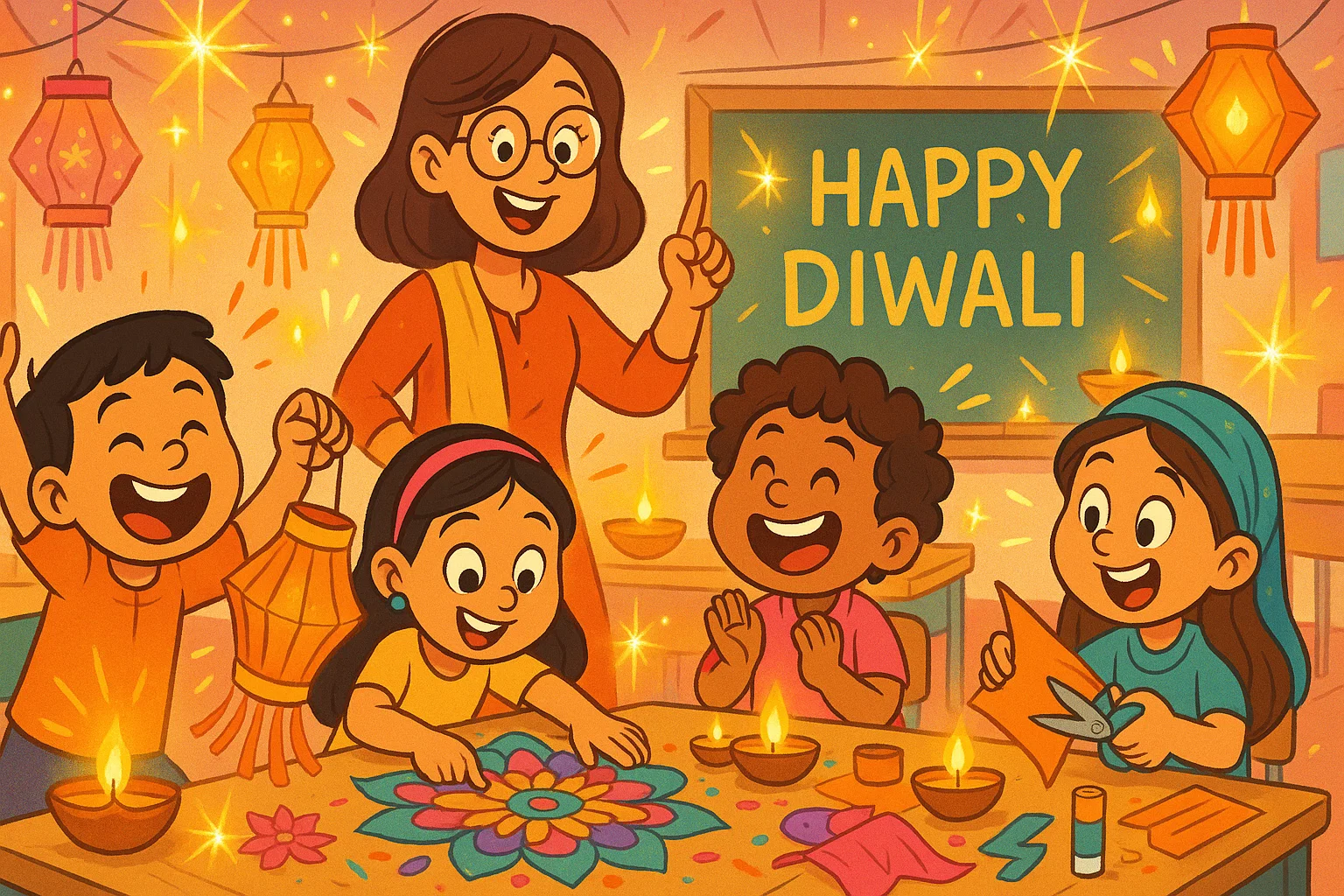
Diwali, the Festival of Lights, is one of the most vibrant and joyous celebrations observed globally. It’s a wonderful opportunity to introduce children to cultural diversity, history, and values like goodness prevailing over evil. Engaging children in the preparations transforms the abstract idea of a festival into tangible, memorable experiences that foster creativity and connection.
This comprehensive guide provides fun Diwali activities for kids across different age groups – from toddlers in the Early Years Foundation Stage (EYFS) to children in KS1 and beyond. This guide explores creative Diwali craft ideas, sensory tray fun, educational Diwali story activities, and practical tips to ensure your little one enjoys a safe, memorable, and meaningful Diwali festival.
Diwali Date and Festival Overview for Kids
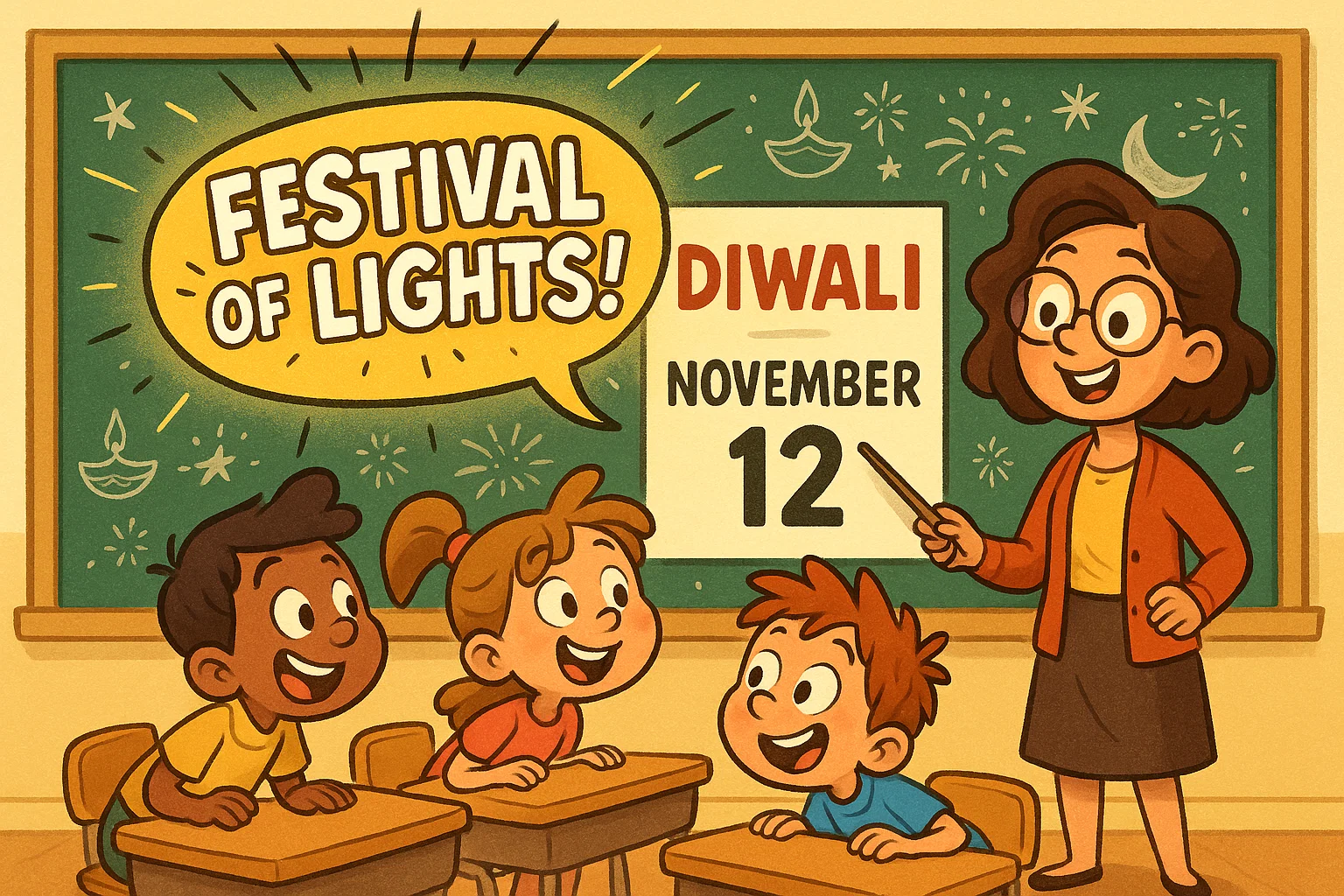
Diwali is a Hindu festival, but it is also celebrated by Hindus, Jains, and Sikhs worldwide. Its significance revolves around the triumph of light over darkness, knowledge over ignorance, and good over evil.
Diwali 2025 Date Guide
Diwali is a five-day festival observed on the fifteenth day of the Hindu lunar month of Kartika. Since the date follows the lunar calendar, it changes each year.
In 2025, the main day of Diwali is expected to fall on Saturday, October 25th.
The five days of Diwali celebrations typically involve:
- Dhanteras: Cleaning the home and shopping for utensils or gold for good fortune.
- Narak Chaturdashi (Choti Diwali): Decorating the house with diyas and making rangoli designs.
- Lakshmi Puja (Main Diwali): Worshipping Lakshmi, the Hindu goddess of wealth, and conducting family prayers, followed by feasts, firework displays, and lighting diya lamps.
- Padwa: Celebrating the bond between husband and wife.
- Bhai Dooj: Celebrating the bond between siblings.
Who Celebrates Diwali
While historically and primarily associated with Hinduism, Diwali is a major festival observed by several communities across the globe, especially in India, Nepal, Sri Lanka, and many diaspora communities.
- Hindus: Celebrate the return of Lord Rama and Sita to Ayodhya.
- Sikhs: Celebrate Bandi Chhor Divas, which marks the day Guru Hargobind was released from prison.
- Jains: Celebrate the day Lord Mahavira attained enlightenment (Nirvana).
Introducing this variety helps teach children about inclusivity and the rich tapestry of global traditions.
Festival of Light Meaning for Children
The most profound element of Diwali for children is its connection to light. Explain that just as a small diya can push back the darkness in a room, our acts of kindness and love can push back sadness or unkindness in the world. This makes the festival of lights a beautiful metaphor for moral and personal renewal.
Popular Diwali Crafts for Kids
Hands-on craft activities and games are perfect for younger children to engage with Diwali-themed celebrations. They simultaneously promote fine motor skills and cultural appreciation.
| Age Group | Recommended Activity Focus | Skill Development |
| Toddler/EYFS | Simple colouring, sticker placement, chunky dough models, large stencils. | Pincer grip, sensory processing, colour recognition. |
| KS1 (Ages 5-7) | Cutting, gluing intricate shapes, painting details, using air-drying clay. | Hand-eye coordination, sustained attention, following simple instructions. |
| KS2 (Ages 7+) | Complex folding, detailed rangoli patterns, simple sewing/beading, Diwali card making. | Precision, planning, advanced dexterity. |
Rangoli Patterns for Kids
Rangoli is one of the most visible Diwali decorations – intricate patterns created on the floor using materials like colourful rice, sand, or flower petals. Creating rangoli is a fantastic way to develop fine motor skills.
- Toddler/Early Years Safe Rangoli: Use large cookie cutters, stencils, or glue rangoli designs onto paper with coloured salt or sand.
- Chalk or Paper Rangoli: For classroom environments, chalk on pavement or large sheets of black paper with brightly coloured crayons offer a mess-free alternative.
- Pulses and Rice: Dyeing rice and various pulses (chickpeas, lentils) is an exciting Diwali activity. Children can then pour these materials into pre-drawn outlines using funnels or spoons.
Making Diya or Diva Lamps
Making your own diyas is a core tradition. Since real flames require strict supervision, focusing on non-flame options is crucial for children.
- Air-Drying Clay Diyas: Roll out air-drying clay and let your child shape it into a small bowl for the wick (or light source). They can decorate the edges with simple tools or beads.
- Paper Plate Diyas: Cut paper plates in half, decorate them with paint and glitter, and attach a yellow/orange paper ‘flame’ to the back.
- Recycled Cup Diyas: Paint small yogurt pots or paper cups, and place battery-operated candles inside to light the way safely.
Diwali Paper Lanterns
Paper lanterns (or kandils) are hung up to welcome guests and brighten the home. This craft activity helps children practice cutting and folding.
- Simple Lantern: Fold a rectangular piece of colourful paper in half, cut slits along the folded edge, and then unfold and glue the short ends together. Add a handle.
- Paper Cup Lights: String together multiple decorated paper cups to make a hanging decoration or banner. This promotes creativity while making a shared project.
Fireworks Art Projects
Real firework displays are a major part of Diwali, but art allows children to explore the colours and shapes safely.
- Glitter Glue & Black Paper: The contrast of vibrant glitter or metallic paint on black paper creates stunning silhouette firework bursts.
- Sponge Stamping: Cut kitchen sponges into various small shapes. Dip them into brightly coloured paint and stamp them onto paper to create layered, overlapping firework shapes.
- Fork Painting: Dip the prongs of a fork into paint and drag them outward from a central point to create an explosive, streaky effect.
Elephant or Mandala Decorations
These super fun Diwali crafts use traditional Indian symbols. Children can paint or glue pompoms onto pre-cut elephant shapes or simply create something beautiful by colouring in complex, intricate mandala designs (Diwali colouring pages).
Sensory and Play-Based Diwali Activities
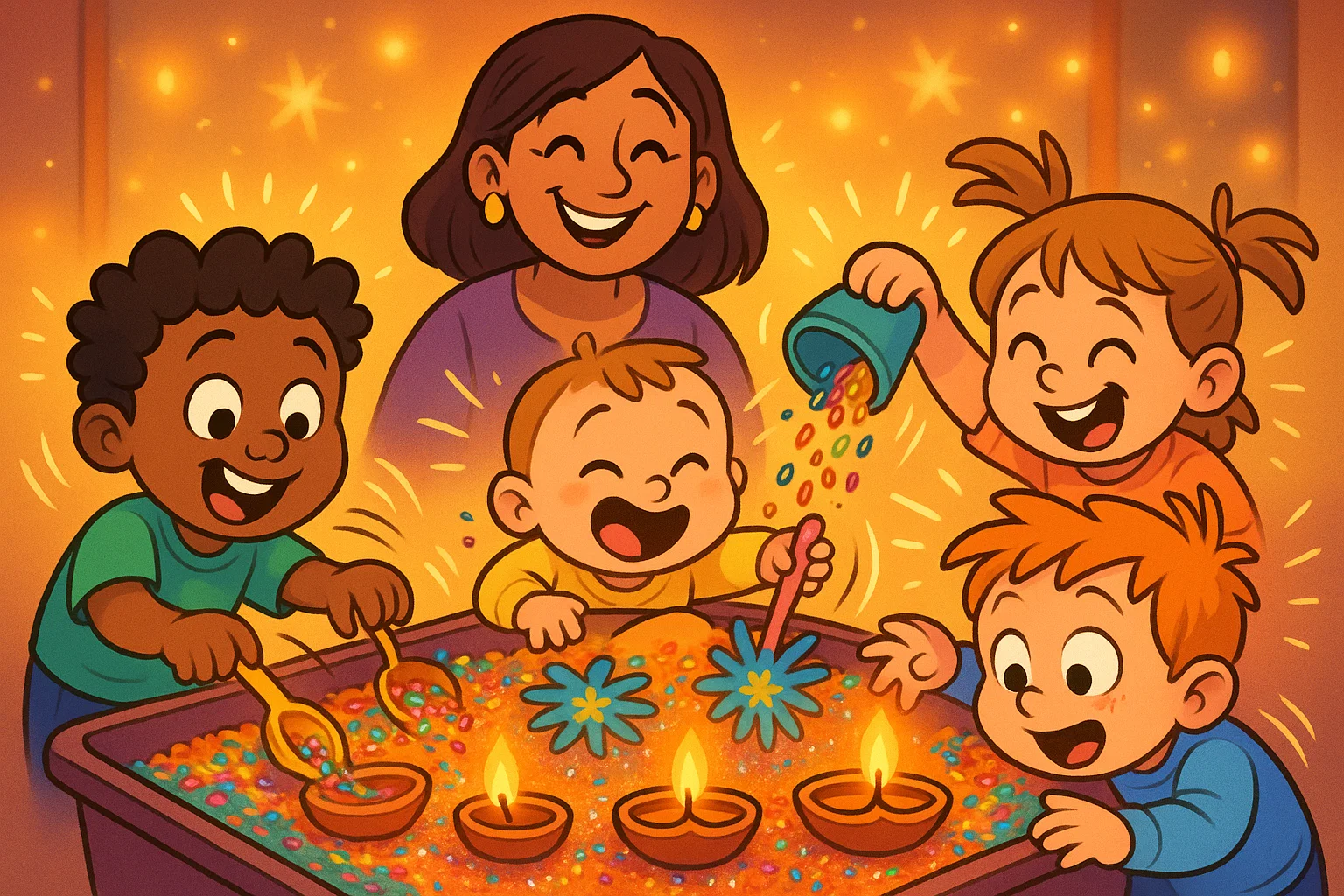
Messy play and sensory exploration are vital for developing minds, particularly in the EYFS and toddler stages.
Firework Sensory Tray
A sensory tray allows young children to explore textures and sounds related to the festival in a controlled setting.
- Materials: Coloured, dry rice or pasta; sequins and glitter; small, shiny pom-poms; glow sticks (ensure they are sealed and safe); small scoops and cups; battery-operated candles.
- Setup: Mix the colourful materials in a large plastic bin. Hide small plastic coins or beads within the mix (representing good fortune) for a fun treasure hunt. The glow sticks and lights simulate the night-time sparkle of fireworks.
Play Dough Mandalas
This is a simple activity that dramatically boosts fine motor skills.
- Activity: Provide play dough (ideally brightly coloured) and a variety of small items: buttons, small stones, dried beans, seeds, or beads.
- Goal: Encourage children to press the materials into the dough to make symmetrical, circular rangoli patterns. They are not drawing; they are using objects to create textures and patterns.
Light Exploration Play
Directly engaging with light is a powerful way to understand the central theme of the Diwali festival.
- Shadow Puppets: Use hand shapes or cut-out figures to tell the story of Rama and Sita behind a sheet, using a torch as a light source.
- Translucent Building: Use coloured transparent blocks, plastic bottles filled with coloured water, or tissue paper to build a ‘Palace of Light’ in front of a window or light source.
Diwali Learning Activities for School Kids
For KS1 and KS2 children, the focus shifts to learning the cultural and historical significance.
Story of Rama and Sita for Kids
The ancient story of Rama and his wife, Sita, is central to the Northern Indian celebration of Diwali. They returned to Ayodhya after 14 years of exile and defeated the demon king Ravana, and the people lit diyas to guide them home.
Activity Ideas:
- Sequencing Cards: Create simple picture cards illustrating key scenes (exile, fight, return). Children can arrange them in the correct order.
- Puppet Show: Encourage children to make simple stick puppets and retell the story in a group setting.
- Hot Seating: A child plays the role of Rama or Sita, and the class asks them questions about their feelings and experiences.
Comparing Festivals of Light
This activity is excellent for promoting cultural understanding and is ideal for a KS1 or KS2 comparative lesson.
| Festival | Culture | Main Symbol/Light Source | Core Meaning |
| Diwali | Hindu, Sikh, Jain | Diya Lamps, Fireworks, Lanterns | Triumph of good over evil (Rama’s return). |
| Hanukkah | Jewish | Menorah (Candelabra) | Miracle of the oil (eight days of light). |
| Christmas | Christian | Candles, Star, Tree Lights | Birth of Jesus (light of the world). |
KS1 and KS2 Lesson Ideas
These educational tasks link Diwali celebrations to curriculum subjects.
- Design and Technology: Design a template for a simple activity like a geometric lantern or a safe diwali rangoli stencil.
- Literacy: Write a ‘Thank You’ letter to Goddess Lakshmi for wealth and prosperity, or write instructions on how to make traditional Indian sweets.
- History/Geography: Use online resources to find photos of different diwali decorations and traditions from different regions of India.
Diwali Decorations Kids Can Make
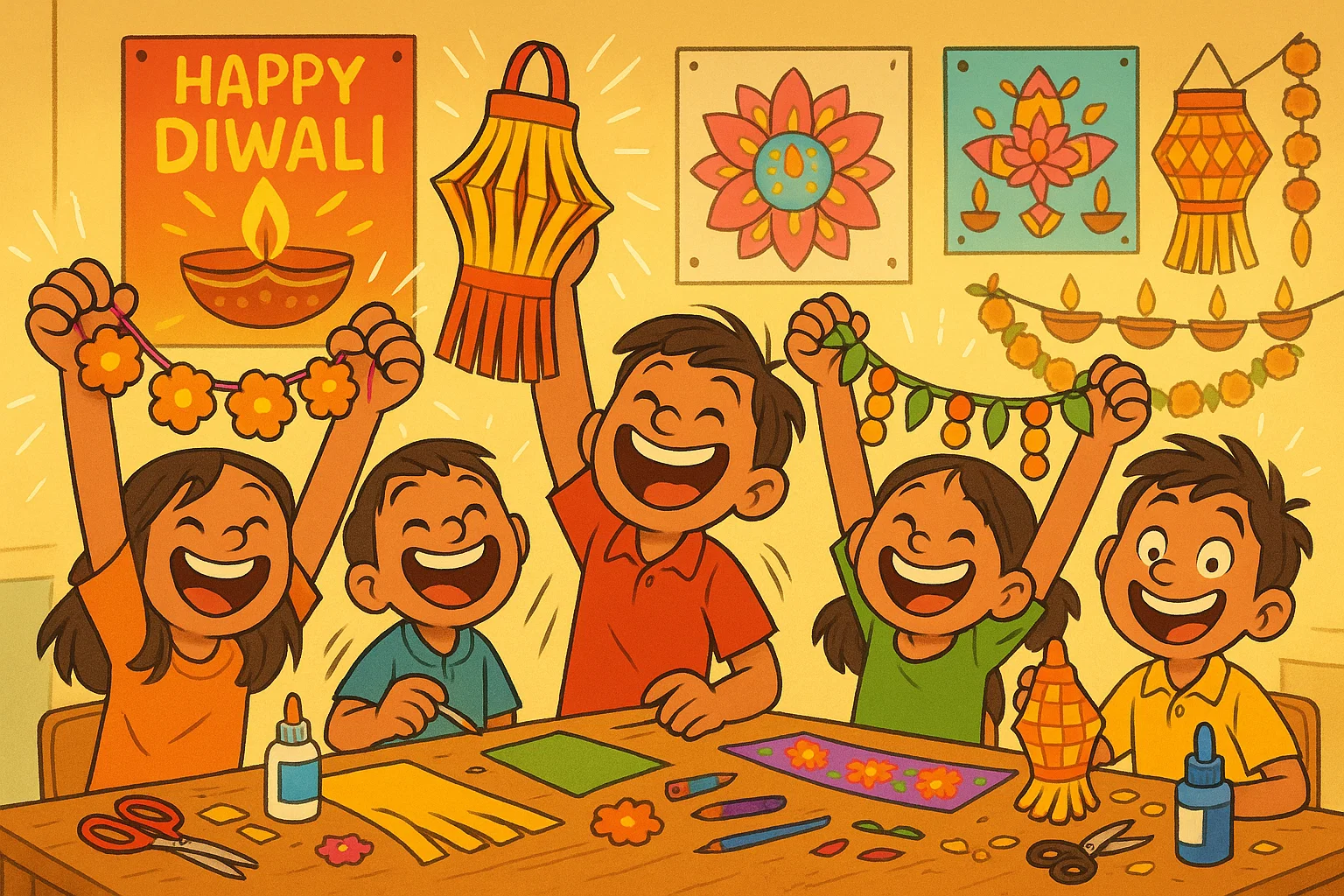
Making Diwali decorations is a cherished part of the family celebration.
Paper Cup Garland
This transforms simple household items into a colourful banner, known as a Toran or garland.
- Instructions: Decorate the outsides of 8-10 paper cups with bright paint, markers, or stick-on jewels. Punch a hole in the bottom of each cup. String the cups together through the holes using thick thread or wool to make a long, hanging banner.
Torans for Doors or Walls
A toran is a decorative doorway hanging traditionally made of mango leaves and marigolds.
- Craft Version: Cut out leaf and flower shapes from brightly coloured felt or paper. Attach them to a long piece of ribbon or string to create a welcoming door hanging. This simple activity gives children ownership over the home’s decoration.
Handprint or Footprint Art
Use children’s handprints to make simple, adorable Diwali-themed images.
- Diyas: Paint the palm bright yellow or orange and the fingers a darker colour (like the flame). Press it onto paper. Add a small ‘lamp base’ drawn or cut from paper underneath.
- Rocket: Paint the sole of the foot orange, yellow, or red and press it onto paper. Draw firework trails coming from the heel end to make a Diwali rocket.
Diwali Food Activities for Kids
Diwali treats are integral to the festival. Getting kids involved in the kitchen safely is a wonderful way to learn.
Making or Tasting Indian Sweets
- No-Cook Ladoo: Mix crushed biscuits or graham crackers with condensed milk and desiccated coconut. Add a sprinkle of cardamom and roll into balls (ladoo). This is a safe and sensory kitchen task.
- Sweet Treat Tasting: Arrange a small selection of safe, store-bought Indian sweets (mithai). Encourage children to describe the tastes, smells, and textures – a great, fun Diwali sensory experience.
Sweet Treat Decorating
Let children help package the gifts for family or friends.
- Decorate Boxes: Provide plain cardboard boxes or tins. Children can paint, glitter, or stick jewels on them to create special Diwali packaging for their homemade or store-bought Diwali gift treats.
Diwali Music, Dance, and Performance Activities
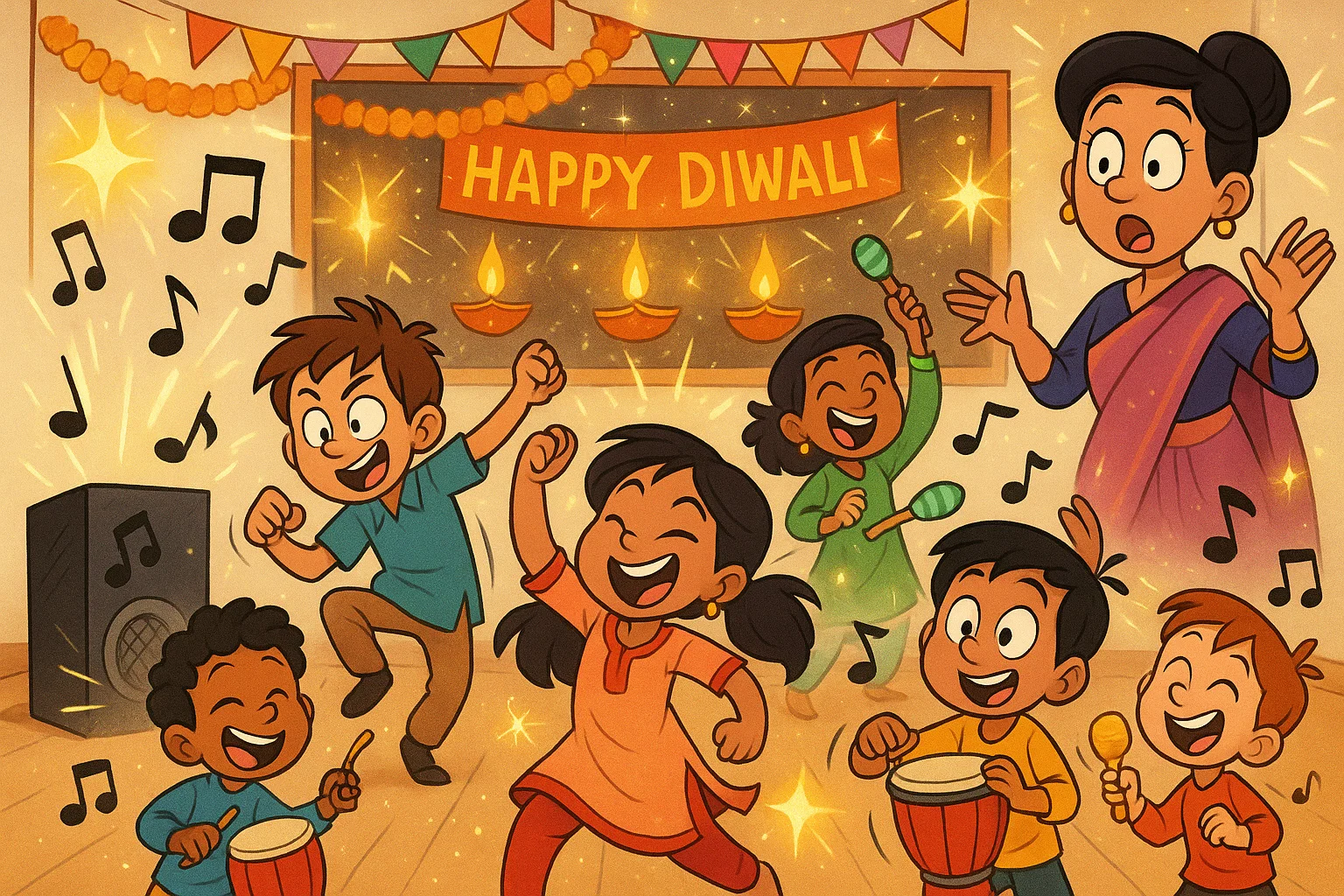
Expressive arts encourage group work and memory.
Kids’ Diwali Dance Activity
- Activity: Put on some upbeat Indian music (Bollywood is often a hit!). Teach them 2-3 simple, repetitive movements, like clapping, stepping side-to-side, or twirling. Simple, structured movement is excellent for developing body awareness and coordination.
Festive Music Play
- Soundscape: Provide simple instruments (shakers, drums, triangles). Ask children to create a soundscape for the Diwali story – a slow, quiet sound for the exile, a loud, fast sound for the battle, and a joyous sound for the return.
Mini Performances for Classrooms
- Light Parade: After making their lanterns or diya lamps, the children can perform a small ‘Light Parade,’ carrying their illuminated crafts around the classroom or hall to showcase their work and celebrate light.
Safe Diwali Celebration with Kids
Safety is paramount, especially when celebrating a festival that involves light and firework displays.
Light and Candle Safety
- Emphasize LED: Always use battery-operated candles or fairy lights instead of traditional oil or wax candles for child-led activities. They provide the same beautiful glow without any fire risk.
- Wick and Oil Safety: If traditional diyas are used, keep them well out of reach on a high mantle or sealed outdoor space, ensuring constant adult supervision.
Firework and Sparkler Precautions
- Alternatives: Use bubble wrap popping (the sound is a safer alternative to the firework blast) or glow sticks. Stick to supervised firework displays only.
- Sparklers: For older children (KS2 and above) who may use sparklers, stress the ‘one at a time’ rule, have a bucket of water nearby, and ensure they wear gloves.
Classroom and Home Safety Planning
- Clear Spaces: Ensure areas where lights and decorations are placed are free of flammable materials.
- Supervision Ratios: Teachers and parents should maintain high supervision ratios during craft activities that involve cutting, glitter, or heat (e.g., hot glue for older kids).
Tips for Coordinating Diwali Activities
Planning makes a significant difference to the enjoyment level for both adults and children.
Preparing Materials in Advance
- Themed Kits: Create individual Diwali activity kits containing small containers of paint, glitter, a piece of card, a template, and an adhesive of choice. This minimises sharing and speeds up transition time.
- Visual Instructions: For multi-step crafts like making a lantern, prepare visual instructions – photos or simple drawings – that children can follow independently.
Encouraging Group Participation
- Shared Rangoli: Outline a large rangoli on the floor or a large sheet of paper. Assign different sections to groups of children, allowing them to choose their colour and material. This shared effort promotes teamwork and a sense of collective achievement.
Creating a Balanced Activity Schedule
A well-structured schedule prevents exhaustion and keeps engagement high.
| Time Block (Example) | Activity Type | Example Task |
| Morning (Active) | Storytelling & Movement | Listen to the story of Rama and Sita, followed by a simple Diwali dance. |
| Mid-Day (Quiet/Focus) | Fine Motor Skills Craft | Making diya lamps from clay or completing a Diwali colouring pages worksheet. |
| Afternoon (Sensory/Kitchen) | Fun Activities & Messy Play | Firework sensory tray exploration or decorating no-cook diwali treats. |
By using these varied and engaging ideas, you can ensure your family or classroom celebrates this wonderful festival of lights with joy, learning, and cultural richness. Happy Diwali!

Take a short quiz to find out what your everyday choices say about your parenting style
When your child is curious about something new, what’s your instinct?
Take a short quiz to find out what your everyday choices say about your parenting style
“Can I download this app?” What happens next?
Take a short quiz to find out what your everyday choices say about your parenting style
When it comes to rules at home, which sounds most like you?
Take a short quiz to find out what your everyday choices say about your parenting style
If you could give your child one life skill today, what would you pick?
Take a short quiz to find out what your everyday choices say about your parenting style
Your child gets to choose what to watch. What would your ideal setup look like?
Take a short quiz to find out what your everyday choices say about your parenting style
Pick your parenting superpower ✨



