Apps to Make New Friends for Kids: Friendship and Chatting

 Discover a Free Education Video App for Kids
Pastory uses AI to personalize educational video content based on your child’s interests and personality. Safe, engaging, and built for curious young minds. Sign up now to stay updated and enjoy early access with a free trial

Digital friendship platforms often raise concerns among parents, yet structured and well-moderated solutions can play a constructive role in children’s social development. When designed with age-appropriate safeguards, such environments help young users practice communication, broaden social interaction, and connect with peers who share similar interests, especially in situations where offline opportunities are limited.
The value of these tools depends on balance. Online connectivity should complement, not replace, real-world relationships, and safety must remain a central priority. Active parental involvement, clear usage boundaries, and informed selection criteria transform one app into a controlled space where children can explore social connections while developing responsible digital behavior.
Benefits of Using Apps for Children
Despite safety concerns, an app to make new friends can offer significant developmental benefits when used properly. These online platforms provide unique opportunities for social growth and connection building. It’s a good way to meet people.
Expanding Social Circles & Skills
Friendship apps help children connect with people who share their interests, especially valuable for kids in small communities or those who have moved to a new city. They also help kids practice essential social skills like clear expression and conversation maintenance.
Building Confidence & Exploring Interests
Positive online social experiences boost kids’ confidence. When children find friends who share their passions, it validates their self-worth. Interest-based matching helps children find peers who share their hobbies, making it a great app to meet new people.
Potential Risks and Mitigation
Awareness of possible risks allows families to make informed decisions about digital friendship tools. Early understanding supports proactive protection strategies and reduces exposure to harmful interactions.
Online Predators & Inappropriate Content
The possibility of encountering harmful individuals remains a serious concern. Predators may attempt to use one app designed for meeting friends as a gateway to manipulation or grooming. Risk reduction depends on educating children to recognize warning signs, establishing clear rules for sharing personal information, and selecting platforms with strong moderation and content filtering systems.
Cyberbullying & Privacy
Social communication platforms may also become environments for bullying or peer pressure. Prevention requires teaching children how to respond appropriately, block unwanted contact, and report abusive behavior. Personal data protection remains critical, as children should never share profiles, location details, or identifying information with strangers.
Key preventive measures include:
- Clear family rules for online interaction
- Regular discussions about respectful communication
- Use of reporting and blocking tools
- Ongoing parental review of privacy settings
Choosing the Right App for Your Child
Selecting an appropriate solution for making friends requires careful consideration of a child’s age, maturity level, and social needs. No universal option suits every family, so evaluation should remain individualized and context-driven.
Key factors to assess include age appropriateness, available safety features such as parental controls, alignment with the intended purpose—whether meeting peers nearby or connecting through shared interests—and compatibility with family values. Regular reassessment is essential as children grow, preferences change, and one chosen app may no longer meet developmental requirements.
Friend-Making Apps for Kids
The following apps offer various ways for children to build friendships online. Each has different features, safety, and target audiences.
Friendometry: Parent-Driven Approach
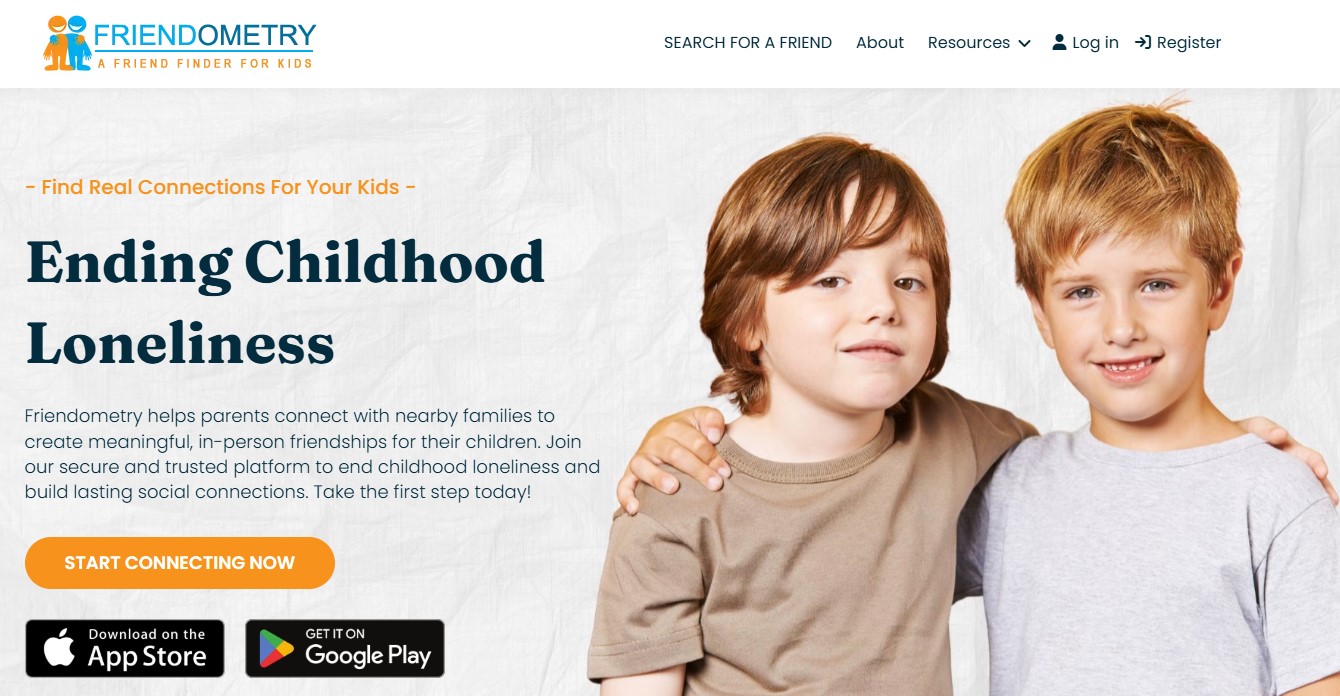
Friendometry uses a parent-controlled model, offering maximum parental oversight. Parents use the app to find potential friends with similar interests. Children interact via supervised messaging and fun activities, aiding the transition to friends in real life.
- Key Features: Parent-managed profiles, location-based matching, event planning for real-world meetups.
- Safety Features: High parental control over connections and communications.
- Download/Website: Friendometry Website
Yubo: Social Networking for Teens

Yubo, popular among teens, operates in a format similar to mainstream social media platforms. The app relies on swipe-based discovery and live streaming, which requires mature judgment when meeting new friends online.
Parents are advised to discuss responsible online behavior, boundaries, and privacy considerations in detail, ensuring that teens understand potential risks and appropriate conduct before active use.
- Key Features: Swipe to match, live streaming, and interest-based groups.
- Safety Features: Age verification, content moderation, user reporting.
- Download/Website: Yubo Website
Hoop: Snap-Based Connections

Hoop integrates with Snapchat, enabling users to discover new friends through shared interests and mutual preferences. This app functions as a discovery layer, directing connections to an existing social environment where communication already feels familiar to many teens.
Interest-based profiles help surface potential friends with similar hobbies, music tastes, or activities, reducing random contact and increasing relevance. Such a structure supports intentional social connections while relying on established privacy settings and user controls within the connected platform.
- Key Features: Connects to Snapchat, interest-based matching.
- Safety Features: Relies on Snapchat’s privacy settings and safety features.
- Download/Website
Messenger Kids: Parent-Controlled Messaging
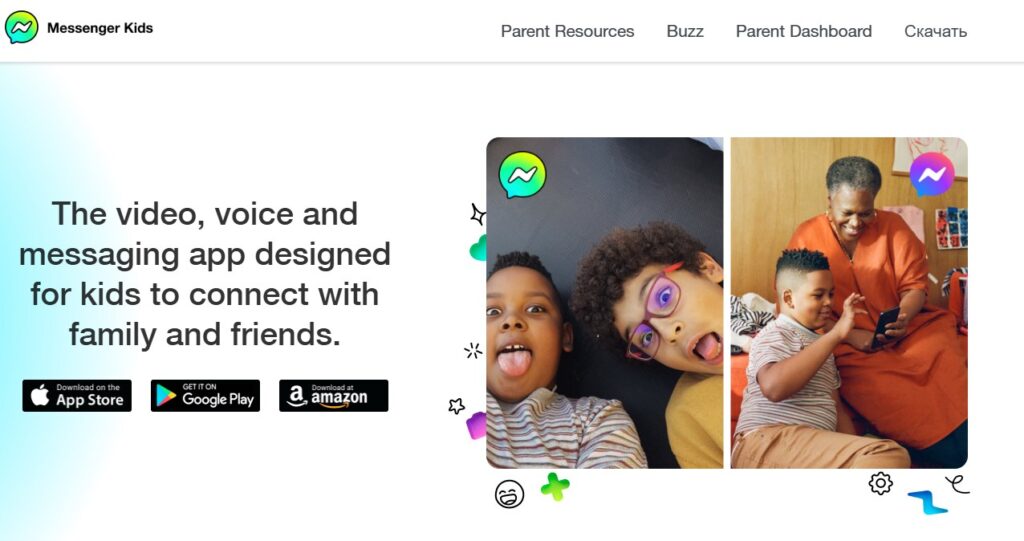
Messenger Kids requires full parental approval for every contact, creating a controlled communication environment well suited to younger children. Such a structure allows families to manage social interaction carefully while enabling children to maintain existing friendships and stay in touch with approved contacts.
The experience includes playful visual elements, stickers, and creative tools that encourage communication without exposing users to public profiles or unsolicited messages. Safety remains the primary design priority, ensuring that digital interaction supports social development within clearly defined boundaries through a single, well-regulated app.
- Key Features: Parent-approved contacts, creative filters, games.
- Safety Features: No in-app purchases, ads, or public profiles. Parents control contacts.
- Download/Website
JusTalk Kids: Safe Video Calling

JusTalk Kids provides secure video calling for children with built-in parental controls and contact monitoring. Supervised access ensures communication remains limited to approved contacts, reducing the risk of unwanted interactions while supporting regular social contact.
Creative tools such as drawing during calls, interactive games, and visual effects increase engagement and help conversations feel natural and enjoyable. This single app combines safety-oriented design with playful elements, making digital communication more appealing without compromising parental oversight.
- Key Features: Video calls, doodle on calls, games during calls.
- Safety Features: Parental control over contacts, no unwanted calls.
- Download/Website
Peeps: Global Friend Connections

Peeps supports international friendships through a structured environment focused on shared interests and cultural exchange. The platform emphasizes moderated interaction, clear community rules, and safety protocols designed to reduce exposure to inappropriate contact while encouraging respectful communication.
Interest-based matching helps children connect with peers from different countries in a meaningful way, promoting curiosity, tolerance, and early cross-cultural awareness without compromising privacy or parental expectations.
- Key Features: Global connections, interest matching.
- Safety Features: Moderation and safety guidelines.
- Download/Website
LMK

LMK focuses on activity-based friend matching, helping users find people who share similar activities. This helps children find friends with similar interests and socialize. Users can take the initiative to connect based on shared experiences.
- Key Features: Activity-based matching, interest groups.
- Safety Features: Moderation, user reporting.
- Download/Website
Features to Look for in Kid-Friendly Social Apps
| Feature Category | Essential Elements | Benefits |
| Safety Controls | Parental oversight, content filtering, reporting tools | Protection from inappropriate content and interactions |
| Age Verification | Robust age checking, developmental appropriateness | Ensures children interact with appropriate peer groups |
| Privacy Protection | Limited data collection, secure storage, clear policies | Safeguards personal information and digital footprint |
| User Interface | Intuitive design, clear navigation, accessibility features | Supports independent use while maintaining safety |
Interest-Based Matching
High-quality friendship platforms use structured interest matching that allows children to indicate specific hobbies, preferences, and activities. Precise matching increases the likelihood of connecting with like-minded peers, which supports more meaningful and lasting social connections.
Easy-to-Use Interfaces
Child-oriented design focuses on clear navigation, visual simplicity, and predictable interactions. Independent use should feel intuitive while still providing visible access to safety tools and guidance elements.
Parental Control & Ad-Free Experience
Strong parental control systems enable flexible oversight without constant intervention. An advertising-free environment reduces exposure to unsuitable content and minimizes distractions, allowing social interaction to remain focused and age-appropriate.
Key elements that contribute to a safe and effective experience include:
- Interest filters that limit random or irrelevant contacts
- Simple layouts adapted to developmental abilities
- Built-in moderation and parental visibility
- Absence of third-party advertising content
Conclusion: Fostering Meaningful Connections
Friend-making apps can support children in developing social skills, widening peer interaction, and forming friendships when appropriate supervision is in place. Effectiveness depends on thoughtful app selection and a balanced combination of online communication and real-world social activity.
These platforms work best as complementary tools rather than replacements for offline interaction. Safe and guided communication helps children build early digital citizenship skills while maintaining meaningful relationships. Structured use also enables the creation of a manageable and age-appropriate social network.
Positive outcomes are most likely when families establish clear expectations and regularly assess whether a selected app aligns with a child’s needs and maturity level. Ongoing review ensures that using an app to meet new friends continues to support healthy social development, especially for children adjusting to a new environment or seeking connections after a move..
Questions and Answers
Are apps like Wizz or apps like Hoop safe for teens aged 13 and older?
Apps like Wizz and apps like Hoop are designed for teens aged 13+ and positioned closer to social networking apps than teen dating apps. Safety depends on moderation quality, privacy and security settings, and whether chat, video chat, and teen chat features are actively monitored.
How do friendship apps differ from teen dating apps or apps like Tinder?
Friend-making platforms focus on helping users find friends, build social connections, and make friends online through shared interests. Teen dating apps, online dating platforms, apps like Tinder, Bumble BFF, MeetMe, Skout, or other hookup apps rely on dating mechanics and are not suitable as an app for teens.
Can a chat app really help teens make new friends easily?
A well-moderated chat app or messaging app allows teens to send friend requests, create a friends list, and communicate safely. Interest-based matching helps users know new people and make connections without the pressure associated with dating app environments.
Are most social friendship platforms free apps and free to use?
Many apps available for teens operate as free apps with core features free to use, including chat, teen chat, and limited video chat. Premium upgrades usually unlock visibility tools or expanded social networking apps functions, but basic communication remains accessible.
Do these apps support video chat and group interaction?
Many top apps include video chat, group chat, and meetup-style spaces to support broader social connections. These tools help teens looking for friends interact with multiple people and make social bonds, provided privacy settings are properly configured.
Should parents be concerned about online dating features appearing in some apps?
Some apps like hybrid platforms blur the line between friendship and online dating. Parents should avoid apps that resemble dating app models, apps like Tinder, or platforms associated with hookup apps, and instead choose solutions designed specifically to help teens make friends online in a controlled environment.

Take a short quiz to find out what your everyday choices say about your parenting style
When your child is curious about something new, what’s your instinct?
Take a short quiz to find out what your everyday choices say about your parenting style
“Can I download this app?” What happens next?
Take a short quiz to find out what your everyday choices say about your parenting style
When it comes to rules at home, which sounds most like you?
Take a short quiz to find out what your everyday choices say about your parenting style
If you could give your child one life skill today, what would you pick?
Take a short quiz to find out what your everyday choices say about your parenting style
Your child gets to choose what to watch. What would your ideal setup look like?
Take a short quiz to find out what your everyday choices say about your parenting style
Pick your parenting superpower ✨